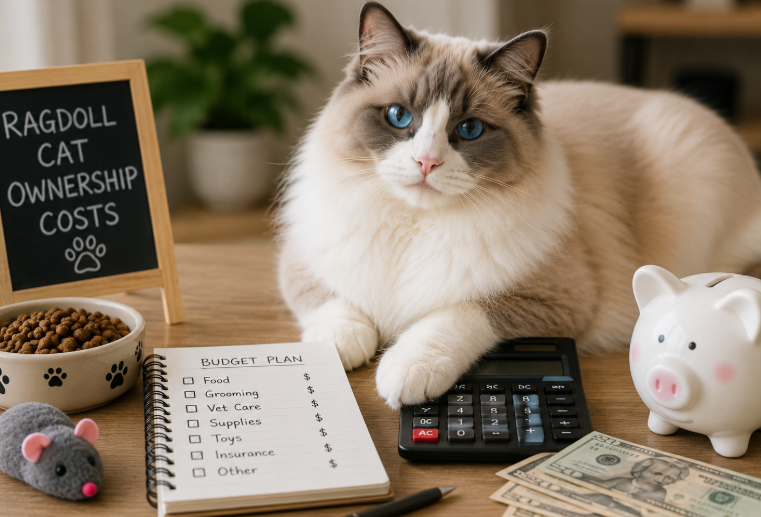
Understanding Ragdoll Cat Ownership Costs is extremely important before bringing one of these beautiful cats home. Ragdolls are affectionate, gentle, and visually stunning pets, yet owning them involves more than the initial purchase price. Many first-time owners focus only on adoption or breeder fees while overlooking long-term expenses such as grooming, food, veterinary care, and daily maintenance.
Although Ragdolls are often considered relatively easygoing cats, they still require consistent financial commitment throughout their lives. Their larger size, long fur, indoor lifestyle, and emotional needs all influence the overall cost of ownership.
Fortunately, understanding these expenses early helps owners prepare realistically. Planning ahead reduces financial stress while ensuring the cat receives proper care and attention. More importantly, responsible budgeting helps create a healthier and more stable environment for your pet.
The good news is that most Ragdoll-related expenses become predictable once routines are established. However, knowing where the biggest costs come from allows owners to make smarter long-term decisions from the beginning.
The Initial Purchase Price
The first major expense usually comes from purchasing or adopting the cat itself. Purebred Ragdolls from reputable breeders often cost significantly more than many other cat breeds.
Ragdoll Cat Ownership Costs typically begin with breeder pricing between several hundred and several thousand dollars depending on bloodline, pedigree quality, breeder reputation, and geographic location.
Show-quality kittens generally cost more than companion-only pets. Cats bred for competitions often come from carefully selected bloodlines with stronger pedigree documentation.
Adoption sometimes offers a more affordable alternative. Rescue organizations and breed-specific shelters occasionally have Ragdolls available at lower prices. However, availability may remain limited compared to breeder purchases.
Responsible breeders also include additional value through vaccinations, early health screenings, and socialization. While cheaper options may feel tempting initially, poorly bred cats sometimes create higher long-term medical expenses later.
Owners should research breeders carefully rather than focusing only on low prices. Ethical breeding practices greatly influence health, temperament, and overall long-term care costs.
Food and Nutrition Expenses
Nutrition becomes one of the most consistent recurring expenses throughout a Ragdoll’s life. Since these cats are larger than average, they usually consume more food than smaller breeds.
High-quality nutrition strongly affects coat condition, digestion, energy levels, and long-term health. Because of this, many owners choose premium cat food designed for balanced protein and nutrient support.
Ragdoll Cat Ownership Costs related to food vary depending on diet quality, feeding style, and portion size. Wet food often costs more than dry food, yet many owners still prefer combining both for hydration and nutritional balance.
Treats, supplements, and occasional specialty diets may add additional monthly expenses as well. Cats with allergies or digestive sensitivities sometimes require prescription or limited-ingredient foods.
Fresh water systems also contribute slightly to feeding-related costs. Many owners purchase water fountains because cats often drink more from moving water sources.
Although food expenses remain ongoing, investing in quality nutrition may help reduce future medical costs related to obesity, poor digestion, or skin problems.
Routine Veterinary Care
Preventive healthcare forms another major part of long-term ownership expenses. Routine veterinary visits help monitor overall health while detecting potential issues early.
Vaccinations, wellness exams, parasite prevention, and dental evaluations all contribute to annual Ragdoll Cat Ownership Costs. Even healthy cats require consistent medical monitoring throughout life.
Spaying or neutering also creates an early one-time expense unless already included through breeders or rescues. Microchipping and registration may add additional small fees.
As cats age, healthcare expenses often increase gradually. Older Ragdolls sometimes require bloodwork, dental cleanings, arthritis support, or specialized treatment plans.
Emergency medical situations represent another important financial consideration. Unexpected illnesses or accidents may create significant veterinary bills without preparation.
Many owners choose pet insurance to help manage unpredictable medical costs. While insurance adds a monthly expense, it may reduce financial strain during emergencies.
Preventive care almost always costs less than delayed treatment for serious health conditions later.
Grooming and Coat Maintenance
Ragdolls have beautiful long coats that require regular grooming to remain healthy and comfortable. Fortunately, their fur mats less than many long-haired breeds because they lack a thick undercoat.
Still, grooming supplies become a recurring expense over time. Brushes, stainless steel combs, nail clippers, shampoos, and grooming wipes all contribute to Ragdoll Cat Ownership Costs gradually.
Some owners groom entirely at home, while others occasionally use professional grooming services. Professional appointments may become especially helpful during heavy seasonal shedding periods or for cats resistant to grooming.
Regular brushing helps reduce shedding, prevent tangles, and maintain skin health. Although grooming tools require an initial investment, quality products often last much longer and work more effectively.
Bathing products also matter because human shampoos may irritate feline skin. Cat-specific grooming products help maintain coat softness safely.
Fortunately, many Ragdolls tolerate grooming well because they enjoy attention and physical affection. Consistent routines therefore make maintenance easier and more manageable over time.
Essential Supplies and Home Setup
Before bringing a Ragdoll home, owners must prepare the indoor environment properly. Initial setup costs can add up quickly depending on product quality and household size.
Litter boxes, scratching posts, cat trees, carriers, food bowls, bedding, and toys all contribute to early Ragdoll Cat Ownership Costs. Larger cats often require oversized litter boxes and sturdier furniture compared to smaller breeds.
Many owners also invest in climbing structures and window perches because Ragdolls enjoy observing their surroundings comfortably indoors.
Scratching posts remain especially important because they support healthy claw maintenance and reduce destructive scratching behaviors.
High-quality carriers improve travel safety during vet visits or emergencies. Soft beds and blankets also help create emotionally secure resting spaces.
Although setup costs may feel high initially, most items last several years with proper care. Investing in durable products often reduces replacement expenses later.
Creating a safe and enriching indoor environment strongly supports both physical and emotional wellness.
Litter and Cleaning Expenses
Litter becomes another consistent monthly expense that many owners underestimate initially. Larger cats usually require more litter volume and larger boxes for comfort.
Ragdoll Cat Ownership Costs related to litter vary depending on product type, number of cats, and cleaning frequency. Clumping litter often costs more upfront, yet many owners prefer it for odor control and easier maintenance.
Cleaning supplies also contribute gradually to long-term expenses. Litter mats, odor removers, vacuum filters, lint rollers, and disinfectants all help maintain cleanliness around the home.
Because Ragdolls have long fur, litter tracking may become more noticeable compared to short-haired breeds. Some owners therefore purchase specialized litter mats or enclosed litter systems to reduce mess.
Daily scooping remains essential for both cleanliness and emotional comfort. Cats strongly prefer clean litter environments and may develop behavioral issues if boxes remain neglected.
Although these expenses appear smaller individually, they add up steadily over time.
The Cost of Indoor Living
Ragdolls thrive best as indoor cats because of their trusting and gentle personality. However, safe indoor living requires additional enrichment and maintenance expenses.
Interactive toys, climbing towers, scratching furniture, and puzzle feeders help prevent boredom and support mental stimulation. These enrichment tools contribute gradually to Ragdoll Cat Ownership Costs throughout the cat’s life.
Window perches and cozy sleeping areas also improve indoor comfort significantly. Emotionally secure cats often display healthier behavior and lower stress levels overall.
Some owners invest in air purifiers because long-haired cats may increase fur and dander throughout the home. Others purchase protective furniture covers or robotic vacuums for easier maintenance.
Indoor cats also require regular exercise opportunities. Interactive play sessions and rotating toys help maintain healthy body weight and emotional balance.
While indoor living creates additional supply expenses, it usually reduces risks associated with outdoor accidents, diseases, or injuries.
Travel and Pet Sitting Costs
Travel-related expenses often surprise first-time cat owners. Vacations, emergencies, or work trips may require professional pet care or boarding services.
Ragdoll Cat Ownership Costs sometimes increase significantly for owners who travel frequently. Because Ragdolls are emotionally attached cats, many owners prefer in-home pet sitters instead of traditional boarding facilities.
Professional pet sitting often costs more than occasional neighbor assistance, yet it may provide greater emotional comfort and routine consistency.
Travel carriers, portable litter systems, and transportation expenses also contribute over time.
Some owners even choose cat-friendly hotels or larger accommodations specifically designed for traveling with pets. These lifestyle choices may affect overall ownership expenses further.
Planning ahead for travel situations helps reduce stress for both cats and owners.
Unexpected Medical Emergencies
Emergency care represents one of the most unpredictable aspects of pet ownership. Even healthy cats occasionally face accidents or sudden illnesses.
Emergency clinics often charge significantly more than standard veterinary appointments, especially during nights or weekends. Surgical procedures, diagnostic testing, and hospitalization may quickly increase Ragdoll Cat Ownership Costs unexpectedly.
Common emergencies include urinary blockages, accidental injuries, digestive obstructions, or severe infections. Long-haired cats may also occasionally develop hairball complications requiring treatment.
Emergency savings funds or pet insurance help reduce financial pressure during stressful situations. Many owners find peace of mind knowing unexpected care remains financially manageable.
Preventive routines greatly reduce risk, yet no owner can eliminate emergencies completely.
Financial preparation allows owners to focus more fully on their cat’s recovery when urgent care becomes necessary.
Long-Term Financial Commitment
Ragdolls often live well into their teenage years with proper care. Because of this, ownership involves long-term financial responsibility rather than short-term expenses alone.
Ragdoll Cat Ownership Costs usually remain manageable monthly once routines stabilize. However, small recurring expenses gradually add up significantly across a cat’s lifetime.
Older cats may eventually require additional medical support, specialized diets, or mobility assistance. Planning for aging-related care becomes increasingly important over time.
Fortunately, many owners feel the emotional companionship easily outweighs the financial commitment. Ragdolls provide affection, comfort, and emotional connection that many families deeply value.
Budgeting realistically from the beginning helps avoid future stress while supporting healthier long-term care decisions.
Responsible ownership ultimately means preparing emotionally and financially for the cat’s entire life.
Conclusion
Owning a Ragdoll involves far more than simply purchasing a beautiful cat. Food, veterinary care, grooming, supplies, litter, enrichment, and emergency preparation all contribute to the real long-term cost of ownership.
Understanding Ragdoll Cat Ownership Costs early allows future owners to prepare responsibly and create healthier living environments from the start. While the expenses may feel significant initially, most become predictable once routines settle into place.
Fortunately, Ragdolls reward owners with companionship, affection, and gentle personalities that many people find incredibly meaningful. Their calm temperament and emotional loyalty often create strong bonds within the home.
Most importantly, responsible planning helps ensure these affectionate cats receive the consistent care and attention they deserve throughout their lives. With thoughtful budgeting and preparation, owning a Ragdoll can become one of the most rewarding long-term experiences for any cat lover.
FAQ
- Are Ragdolls more expensive than regular cats?
Yes, purebred Ragdolls usually cost more because of breeding quality, grooming needs, and long-term care requirements.
- How much should owners budget monthly for cat care?
Monthly costs vary widely, yet food, litter, and routine care typically create consistent ongoing expenses.
- Do long-haired cats require professional grooming often?
Many owners groom at home successfully, although occasional professional grooming may still help during heavy shedding.
- Is pet insurance useful for indoor cats?
Yes, indoor cats can still experience accidents or illnesses that create expensive emergency veterinary bills.
- What supplies are most important for beginners?
Essential items include litter boxes, food bowls, carriers, scratching posts, bedding, and interactive toys.