Learning the best Ragdoll Cat Care Tips can make life much easier for first-time owners. Ragdolls are gentle, affectionate, and easygoing cats, yet they still require proper daily care to stay healthy and comfortable. Their calm personality often makes them seem low maintenance, but consistent grooming, nutrition, emotional attention, and indoor safety all play important roles in their well-being.
Many new owners choose Ragdolls because of their loving behavior and relaxed temperament. Unlike highly independent breeds, Ragdolls usually enjoy human companionship and adapt well to family life. However, their trusting nature also means they rely heavily on owners for emotional security and daily routines.
Fortunately, caring for a Ragdoll does not need to feel overwhelming. With a few simple habits and a better understanding of the breed, beginners can confidently create a healthy environment for their cat. Small daily routines often produce the biggest long-term benefits.
The key is consistency rather than perfection. Once healthy habits become part of everyday life, caring for a Ragdoll becomes much more natural and rewarding.
Understanding the Ragdoll Personality
Before creating routines, owners should understand the personality traits that make this breed unique. Ragdolls are known for being affectionate, calm, and emotionally attached to people. Many follow owners around the house quietly and prefer staying close to family members throughout the day.
Because they form strong emotional bonds, Ragdolls usually dislike isolation or long periods without interaction. They thrive in environments where owners provide companionship, predictable routines, and gentle attention.
Ragdoll Cat Care Tips often focus heavily on emotional wellness because stress affects this breed more noticeably than some other cats. Loud environments, rough handling, or sudden routine changes may create anxiety and discomfort.
Their relaxed temperament also makes them less defensive than many breeds. While this behavior feels lovable, it means owners should prioritize indoor safety carefully. Ragdolls may not react quickly to danger outdoors because they naturally trust people and environments more easily.
Understanding these personality traits helps owners create routines that support both physical and emotional health.
Creating a Comfortable Indoor Environment
Ragdolls adapt best to safe indoor lifestyles. Their calm nature and trusting behavior make outdoor living risky, especially near traffic or unfamiliar animals.
Comfortable indoor spaces should include soft resting areas, scratching posts, climbing options, and quiet hiding spaces. Cats feel more secure when they have choices for relaxation and observation.
Temperature also matters because Ragdolls enjoy warmth and soft textures. Cozy blankets, plush beds, and calm sleeping areas help them feel relaxed throughout the day.
When owners follow Ragdoll Cat Care Tips consistently, maintaining a stable environment becomes very important. Frequent rearranging or loud disruptions may create stress for emotionally sensitive cats.
Window perches often work especially well because many Ragdolls enjoy quietly watching outdoor activity from safe indoor spaces. Interactive toys and cat trees also provide healthy stimulation and light exercise.
Most importantly, indoor living protects Ragdolls from accidents, diseases, and environmental dangers while supporting longer and healthier lives.
Feeding Your Ragdoll Properly
Nutrition strongly affects coat condition, energy levels, digestion, and overall wellness. High-quality cat food with strong protein content usually works best for Ragdolls.
Since Ragdolls are larger cats, portion control matters greatly. Overfeeding may lead to weight gain, especially because this breed often prefers relaxing over intense activity.
Wet food provides valuable hydration support and may help maintain healthier digestion. Many owners combine wet and dry food to create balance between convenience and moisture intake.
Ragdoll Cat Care Tips should always include consistent feeding routines because predictable schedules help cats feel emotionally secure. Most adult cats do well with two balanced meals daily.
Fresh water should remain available at all times. Some cats drink more from water fountains because moving water feels fresher instinctively.
Owners should avoid sudden diet changes whenever possible. Gradual transitions reduce digestive upset while helping cats adapt comfortably to new foods.
Healthy nutrition supports every aspect of feline wellness, including skin, fur, immune function, and long-term comfort.
Grooming Long Fur the Right Way
Ragdolls have beautiful silky coats that require regular maintenance to stay soft and healthy. Fortunately, their fur tangles less than many long-haired breeds because they lack a heavy undercoat.
Even so, brushing remains essential several times each week. Regular grooming removes loose hair, reduces shedding, and prevents mats from forming around the chest, legs, and belly.
Many Ragdolls actually enjoy brushing because they associate grooming with affection and attention. Gentle handling usually creates positive experiences and stronger emotional bonds.
When owners apply Ragdoll Cat Care Tips properly, grooming sessions should remain calm and consistent rather than rushed or stressful.
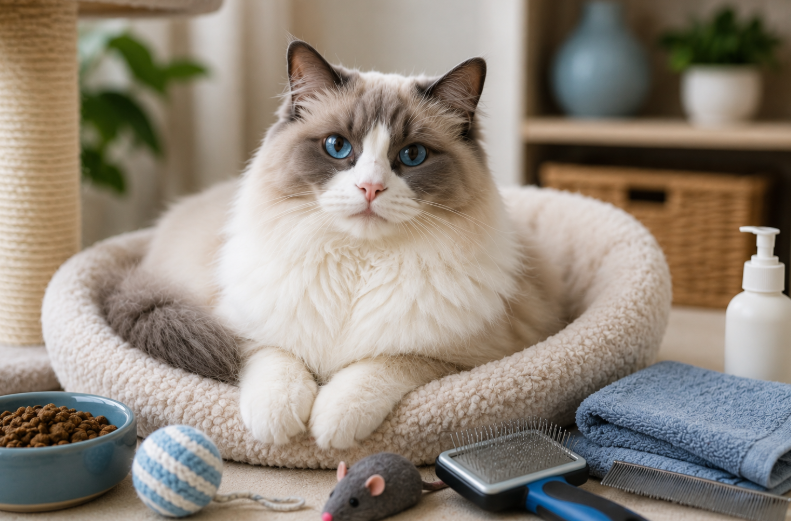
Stainless steel combs and soft slicker brushes often work best for maintaining the coat gently. Bathing occasionally may also help reduce loose fur and maintain cleanliness.
Nail trimming, ear cleaning, and dental care should become part of the routine as well. Small maintenance tasks performed regularly feel much easier than waiting until problems appear.
Healthy grooming habits support comfort while helping owners monitor skin condition and overall health closely.
Why Emotional Attention Matters
Ragdolls are deeply social cats that crave interaction and companionship. Unlike distant or highly independent breeds, they usually prefer staying near people throughout the day.
Owners who spend quality time with their cats often notice calmer behavior and stronger trust. Gentle petting, interactive play, and simple conversation all contribute to emotional wellness.
Ragdoll Cat Care Tips often emphasize companionship because loneliness may create stress-related behaviors in this breed. Cats left alone for long periods sometimes become withdrawn, anxious, or excessively vocal.
Play sessions provide emotional benefits beyond exercise. Interactive toys stimulate mental engagement while strengthening the relationship between cats and owners.
Some Ragdolls even enjoy learning simple routines or responding to familiar voices. Their intelligence and emotional sensitivity make them highly responsive to positive interaction.
Although affection matters greatly, respecting personal boundaries remains important too. Cats occasionally need quiet rest and independent space.
Balanced companionship creates healthier emotional stability and long-term confidence.
Keeping Your Ragdoll Healthy
Preventive healthcare plays a major role in long-term feline wellness. Regular veterinary visits help detect problems early before they become serious.
Vaccinations, parasite prevention, dental checks, and routine examinations all support healthier lives. Since cats often hide illness naturally, subtle symptoms deserve careful attention.
Changes in appetite, grooming habits, litter box use, or energy levels may signal health concerns. Owners should monitor these behaviors consistently.
Ragdoll Cat Care Tips also include maintaining healthy body weight because obesity increases strain on joints and organs. Moderate exercise and proper nutrition help prevent unnecessary weight gain.
Hydration matters as well. Cats that drink too little water may face kidney or urinary issues later in life. Wet food and water fountains often encourage healthier hydration habits naturally.
Spaying or neutering also supports long-term health and may reduce certain behavioral problems.
Preventive care consistently creates better outcomes than waiting until serious symptoms appear.
Litter Box Habits and Cleanliness
Cats feel strongly connected to litter box cleanliness and placement. Dirty or poorly positioned boxes may create stress and behavioral problems quickly.
Most Ragdolls prefer quiet litter areas away from loud appliances or heavy foot traffic. Multiple-cat homes should ideally provide multiple litter boxes to reduce competition.
When owners follow Ragdoll Cat Care Tips consistently, daily scooping becomes extremely important. Cats naturally avoid dirty environments and may refuse to use neglected boxes.
Larger litter boxes often work best because Ragdolls are bigger cats that require more comfortable space. Unscented litter usually feels gentler and less overwhelming for sensitive cats.
Cleaning routines should remain predictable and consistent. Sudden litter type changes may confuse some cats or trigger avoidance behavior temporarily.
Good litter box habits support both emotional comfort and household cleanliness simultaneously.
Helping Ragdolls Stay Active
Although Ragdolls are calm cats, they still need daily movement and mental stimulation. Inactive lifestyles may contribute to weight gain and boredom over time.
Interactive play remains one of the simplest ways to encourage healthy activity. Wand toys, climbing structures, and puzzle feeders all stimulate natural instincts safely indoors.
Ragdoll Cat Care Tips should include balanced activity rather than intense exercise expectations. Short playful sessions throughout the day usually work better than long exhausting routines.
Some Ragdolls enjoy chasing toys gently, while others prefer slower interactive games. Understanding your cat’s personality helps create more enjoyable experiences.
Scratching posts also support healthy behavior by allowing stretching and claw maintenance naturally.
Mental stimulation matters just as much as physical movement. Window perches, treat puzzles, and rotating toys help prevent boredom while supporting emotional wellness.
Healthy activity improves circulation, digestion, sleep quality, and overall mood.
Travel and Routine Changes
Ragdolls generally prefer familiar environments and predictable schedules. Because of this, travel and routine changes may feel stressful initially.
Carrier training helps reduce anxiety during vet visits or trips. Leaving carriers accessible at home with soft bedding encourages positive associations over time.
When owners use Ragdoll Cat Care Tips during travel preparation, familiar items such as blankets and toys often provide comfort and reassurance.
Short practice car rides may also help cats adapt gradually to movement and unfamiliar sounds.
Maintaining feeding and sleep schedules as consistently as possible during changes supports emotional stability.
Some Ragdolls adjust quickly to new situations, while others require extra patience and calm reassurance. Gentle handling and predictable interaction help create confidence gradually.
Owners should always prioritize safety during travel through secure carriers and identification updates.
Common Beginner Mistakes to Avoid
Many first-time owners unintentionally create avoidable problems. One common mistake involves assuming Ragdolls require little grooming because their coats appear naturally soft.
Skipping regular brushing eventually increases shedding and matting risks. Likewise, inconsistent feeding routines may create digestive or behavioral problems.
When following Ragdoll Cat Care Tips, emotional needs deserve just as much attention as physical care. Ignoring companionship needs sometimes leads to stress and anxiety.
Allowing unsupervised outdoor access creates another major risk because Ragdolls tend to trust unfamiliar environments too easily.
Overfeeding also becomes common because these cats often enjoy food and live relatively calm indoor lifestyles.
Some owners accidentally overstimulate cats with excessive handling or noisy environments. Respecting quiet time remains important for emotional balance.
Consistency, patience, and observation usually prevent most beginner mistakes naturally.
Conclusion
Caring for a Ragdoll becomes much easier once owners understand the breed’s calm personality, emotional sensitivity, and daily needs. These affectionate cats thrive when routines remain predictable and environments feel safe and comforting.
The best Ragdoll Cat Care Tips focus on balance rather than perfection. Regular grooming, healthy nutrition, emotional companionship, preventive healthcare, and safe indoor living all work together to support long-term wellness.
Although Ragdolls require attention and consistent care, they reward owners with loyalty, affection, and gentle companionship that few breeds can match. Their loving personality often creates strong emotional bonds within the home.
For beginners, the most important step is simply staying consistent and attentive. Small daily habits create healthier, happier cats while making care routines feel natural over time. With patience and proper understanding, owning a Ragdoll becomes an incredibly rewarding experience.
FAQ
- Are Ragdolls good for first-time cat owners?
Yes, Ragdolls are usually calm, affectionate, and adaptable, which makes them excellent companions for beginners.
- How often should long-haired cats be groomed?
Most long-haired cats benefit from brushing several times weekly to reduce tangles and loose fur.
- Do indoor cats still need exercise daily?
Yes, indoor cats require regular play and mental stimulation to maintain healthy weight and emotional wellness.
- Why do some cats follow owners constantly?
Many affectionate breeds form strong emotional bonds and enjoy staying close to trusted people.
- What type of food works best for larger cats?
High-quality protein-rich diets with balanced nutrition usually support healthy weight, energy, and coat condition.