Creating a healthy Ragdoll Cat Grooming Routine is one of the best ways to keep your cat comfortable, clean, and relaxed at home. Ragdolls are known for their beautiful long coats, soft fur, and calm personality. Although their silky coat tangles less than many other long-haired breeds, regular grooming still plays an important role in maintaining healthy skin and preventing mats.
Many first-time owners worry that grooming a Ragdoll will feel difficult or time-consuming. Fortunately, these cats are usually calm and affectionate during handling, especially when grooming routines begin early and stay consistent.
A proper grooming routine supports more than appearance alone. Regular brushing helps reduce shedding, prevent hairballs, improve circulation, and strengthen emotional bonding between cats and owners.
The key is creating simple habits that feel relaxing instead of stressful. Short consistent sessions often work much better than occasional long grooming attempts. More importantly, calm routines help Ragdolls associate grooming with comfort and positive attention.
Why Grooming Matters for Ragdolls
A healthy Ragdoll Cat Grooming Routine supports both physical health and emotional well-being. Their long silky fur may appear naturally manageable, yet regular maintenance still prevents many common coat problems.
Unlike some long-haired breeds, Ragdolls lack a thick undercoat. Because of this, severe matting happens less often. However, loose fur can still collect around the chest, belly, legs, and tail if grooming remains inconsistent.
Regular brushing also removes dirt, dead hair, and small debris before tangles develop. Additionally, grooming stimulates natural skin oils that help maintain coat softness and shine.
Hairball reduction provides another important benefit. Since cats naturally swallow fur during self-cleaning, reducing loose hair helps improve digestion and comfort.
Grooming sessions also allow owners to monitor skin condition closely. Early signs of irritation, fleas, lumps, or injury often become easier to notice during routine brushing.
Consistent grooming ultimately creates healthier coats and more relaxed daily care routines overall.
Choosing the Right Grooming Tools
The right grooming supplies make maintenance much easier and more comfortable for both cats and owners. Fortunately, a basic Ragdoll Cat Grooming Routine usually requires only a few quality tools.
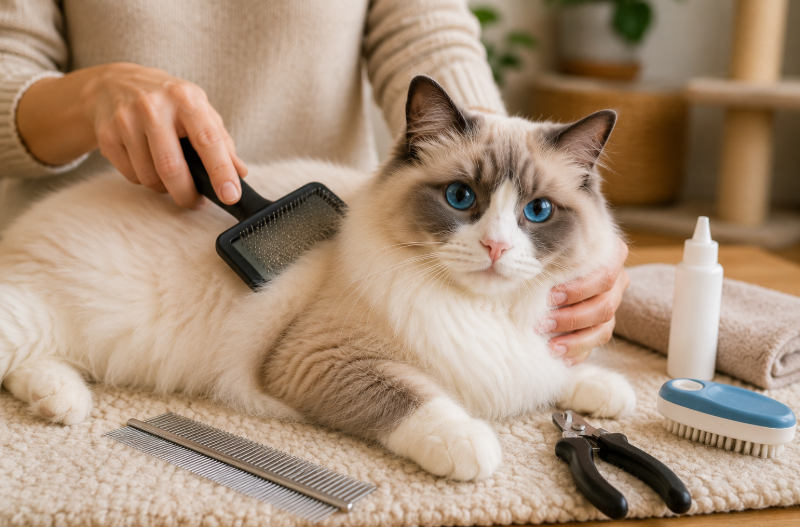
A stainless steel comb often works best for removing loose fur gently while preventing small tangles from worsening. Many owners also use soft slicker brushes to smooth the coat and collect shedding fur effectively.
Wide-tooth combs help manage sensitive areas such as the belly and legs more comfortably. Nail clippers designed specifically for cats also remain important for routine claw maintenance.
Some owners additionally keep grooming wipes or cat-safe shampoos available for occasional cleaning between baths.
High-quality tools generally last longer and feel gentler against the coat. Cheap brushes sometimes pull fur painfully or irritate sensitive skin unnecessarily.
Owners should also choose grooming products designed specifically for cats rather than human products. Feline skin remains more sensitive and requires safer ingredients.
Simple reliable tools usually create the best long-term grooming experience.
How Often Should You Brush a Ragdoll?
Frequency plays a major role in maintaining a successful Ragdoll Cat Grooming Routine. Most Ragdolls benefit from brushing at least three to four times weekly, although some owners prefer short daily sessions.
Daily brushing often works especially well during seasonal shedding periods because it prevents loose fur buildup before mats develop.
Fortunately, many Ragdolls tolerate frequent grooming comfortably because they naturally enjoy physical attention and companionship. Short calm sessions usually feel relaxing rather than stressful.
Consistency matters more than session length. Five to ten minutes of regular brushing often produces better results than infrequent long grooming sessions.
Owners should pay extra attention to areas where tangles form more easily, including under the legs, behind the ears, around the collar area, and near the tail.
Skipping grooming for long periods may allow mats to tighten against the skin, making future sessions far more uncomfortable.
Steady routines create healthier coats while helping cats feel emotionally secure during handling.
Making Grooming Feel Comfortable
Creating positive grooming experiences remains extremely important. A calm Ragdoll Cat Grooming Routine should feel gentle, predictable, and emotionally safe.
Choosing quiet environments helps reduce distractions and anxiety. Soft voices, slow movements, and relaxed handling usually help cats remain comfortable throughout the session.
Owners should begin grooming gradually, especially with kittens or newly adopted cats. Short positive experiences build trust much more effectively than forceful restraint.
Treats, praise, and gentle affection often help reinforce calm behavior naturally. Many Ragdolls quickly associate grooming with attention and bonding once routines become familiar.
Stopping before frustration develops also improves long-term cooperation. Cats remember stressful experiences easily, so ending sessions calmly remains important.
Some cats prefer brushing while relaxing beside owners, while others feel more comfortable on elevated surfaces such as beds or tables.
Observing body language carefully helps owners adjust routines to individual comfort levels.
Managing Shedding Naturally
Although Ragdolls shed less heavily than some long-haired breeds, seasonal shedding still occurs regularly. A consistent Ragdoll Cat Grooming Routine helps control loose fur before it spreads throughout the home.
Regular brushing remains the most effective way to reduce shedding naturally. Removing loose hair before self-grooming also decreases hairball formation significantly.
Healthy nutrition strongly affects coat quality as well. High-quality protein and proper hydration support healthier skin and stronger fur naturally.
Stress reduction also plays a role because anxious cats sometimes shed more excessively than emotionally relaxed ones.
Some owners use grooming gloves during shedding seasons because they feel gentle while collecting loose fur efficiently.
Vacuuming bedding, blankets, and favorite sleeping areas regularly further helps control fur buildup around the home.
While shedding cannot disappear completely, healthy routines usually keep it manageable and much less frustrating.
Bathing a Ragdoll Properly
Most Ragdolls do not require frequent bathing because they naturally maintain clean coats through self-grooming. However, occasional baths may still support a complete Ragdoll Cat Grooming Routine.
Bathing becomes especially useful during heavy shedding seasons, after messy accidents, or when the coat feels oily or dirty.
Cat-safe shampoo designed for sensitive skin usually works best. Human shampoos may dry the skin or create irritation because feline skin has different pH needs.
Warm water and calm handling help reduce stress during baths. Owners should avoid rushing or using loud spray attachments that may frighten cats unnecessarily.
Towels and low-heat drying methods help maintain comfort afterward. Some Ragdolls tolerate blow dryers poorly, while others adapt gradually through positive exposure.
Brushing before bathing helps remove tangles and loose fur more effectively.
Fortunately, most healthy Ragdolls require bathing only occasionally when regular brushing routines remain consistent.
Nail Care and Paw Maintenance
Claw maintenance forms another important part of a healthy Ragdoll Cat Grooming Routine. Overgrown nails may create discomfort, snagging, or accidental scratching problems.
Most cats benefit from nail trimming every few weeks depending on growth speed and scratching habits.
Owners should trim only the sharp transparent tips while avoiding the sensitive quick inside the nail. Cat-specific nail clippers usually provide safer control during trimming.
Introducing paw handling gradually helps reduce stress significantly. Touching paws gently during calm moments builds tolerance over time.
Scratching posts also support healthy claw maintenance naturally by allowing stretching and natural scratching behavior.
Regular paw checks help owners notice injuries, cracked pads, or trapped debris early.
Patience remains extremely important because many cats require gradual adjustment before accepting nail trimming comfortably.
Cleaning Ears and Eyes Safely
Routine ear and eye care helps maintain overall cleanliness and comfort. A balanced Ragdoll Cat Grooming Routine should include regular observation of these sensitive areas.
Healthy ears usually appear clean and pale pink without strong odor or excessive wax buildup. Owners should never insert cotton swabs deeply into the ear canal because this may cause injury.
Instead, soft cloths or vet-approved cleaning solutions help remove visible debris gently when necessary.
Eye cleaning also becomes important because some Ragdolls occasionally develop mild tear staining near the inner corners of the eyes.
Soft damp cloths help wipe away buildup carefully without irritating sensitive skin.
Sudden redness, swelling, discharge, or strong odor may indicate infection requiring veterinary attention rather than home treatment.
Regular observation during grooming sessions helps detect small health concerns before they worsen.
Dental Care and Grooming Connection
Dental hygiene often gets overlooked despite its importance. A complete Ragdoll Cat Grooming Routine should always include oral health awareness.
Poor dental health may contribute to pain, bad breath, reduced appetite, and long-term health complications.
Cat-safe toothbrushes and toothpaste designed specifically for felines usually work best. Human toothpaste contains ingredients unsafe for cats.
Owners should introduce dental care gradually through short positive sessions rather than forceful handling.
Dental treats and specialized diets may also help reduce plaque buildup slightly between brushing sessions.
Regular veterinary dental evaluations remain extremely important because some problems develop below the gumline where owners cannot easily see them.
Healthy teeth support better eating habits, comfort, and overall wellness long term.
Grooming Kittens Early
Starting a Ragdoll Cat Grooming Routine early helps kittens adapt comfortably to lifelong care habits. Young cats generally learn faster and become more accepting through gradual positive exposure.
Short grooming sessions during kittenhood create emotional familiarity with brushing, nail handling, ear checks, and gentle restraint.
Positive reinforcement plays a major role here. Treats, praise, and calm interaction help kittens associate grooming with safety and comfort.
Even brief daily brushing helps build routine consistency naturally. Early exposure also reduces fear during future veterinary care or professional grooming appointments.
Kittens may initially feel playful or distracted during sessions, so patience remains extremely important.
Gentle repetition gradually creates confidence and cooperation over time.
Owners who begin grooming early often experience much easier long-term maintenance later.
Common Grooming Mistakes to Avoid
Many owners accidentally create stress or discomfort during grooming sessions. Understanding common mistakes helps improve the overall experience greatly.
One major issue involves brushing too aggressively. A gentle Ragdoll Cat Grooming Routine should never pull painfully against the coat or skin.
Skipping grooming for long periods also creates preventable matting and shedding problems. Consistency always works better than occasional intensive grooming.
Using unsafe products presents another common mistake. Human shampoos, harsh cleaning wipes, or incorrect grooming tools may irritate feline skin.
Some owners also ignore emotional signals during sessions. Flattened ears, twitching tails, or sudden withdrawal may indicate discomfort requiring breaks.
Punishment should never become part of grooming routines. Calm reassurance and gradual exposure always create healthier cooperation long term.
Patience and emotional awareness usually produce the best grooming results naturally.
Conclusion
Maintaining a healthy Ragdoll Cat Grooming Routine does not need to feel complicated or overwhelming. With the right tools, gentle handling, and consistent habits, grooming quickly becomes a relaxing part of daily care.
Regular brushing, nail trimming, coat checks, and occasional bathing all help support healthier skin, softer fur, and reduced shedding. More importantly, grooming sessions strengthen trust and emotional connection between cats and owners.
Fortunately, Ragdolls naturally tolerate grooming better than many breeds because of their calm and affectionate personality. Their relaxed nature often makes routine maintenance much easier once positive habits become established.
Most importantly, consistency creates the best long-term results. Small daily or weekly routines prevent larger grooming problems while keeping your cat comfortable, clean, and emotionally secure throughout life.
FAQ
- How often should Ragdolls be brushed weekly?
Most benefit from brushing at least three to four times weekly to control shedding and prevent tangles.
- Do Ragdolls require professional grooming regularly?
Many owners manage grooming successfully at home, although occasional professional help may still be useful.
- What type of brush works best for long-haired cats?
Soft slicker brushes and stainless steel combs usually work very well for silky long coats.
- Are baths necessary for indoor cats?
Most indoor cats need only occasional baths when regular brushing and coat maintenance stay consistent.
- Why should grooming start during kittenhood?
Early grooming helps kittens become comfortable with handling, brushing, nail trimming, and routine care.