Learning effective Ragdoll Cat Training Tips can make daily life smoother, calmer, and more enjoyable for both cats and owners. Ragdolls are intelligent, affectionate, and emotionally responsive cats that usually adapt well to positive guidance. While many people assume cats cannot be trained easily, Ragdolls often learn routines, commands, and household expectations surprisingly quickly.
Their calm personality and strong emotional connection to humans make them especially responsive to consistent interaction. Unlike highly independent breeds, Ragdolls usually enjoy attention and naturally want to remain involved in household routines. Because of this, they often respond positively to gentle training methods built around trust and rewards.
Training does not mean forcing strict obedience. Instead, it involves teaching healthy habits, encouraging confidence, and improving communication between owners and cats. Small daily routines often produce the best long-term results.
Fortunately, most training challenges become easier once owners understand how Ragdolls think, react, and learn. Patience, consistency, and emotional awareness all play important roles in successful training.
Why Ragdolls Respond Well to Training
Ragdolls are highly social cats that naturally seek interaction and companionship. This emotional connection makes them more responsive to human attention compared to many independent breeds.
Most Ragdoll Cat Training Tips work best because these cats enjoy praise, affection, and positive reinforcement. They often repeat behaviors that create rewarding experiences or emotional connection.
Their calm personality also contributes to trainability. Ragdolls usually approach new situations with curiosity rather than fear or aggression. This relaxed attitude makes learning environments feel less stressful.
Additionally, Ragdolls tend to observe household routines carefully. Many quickly recognize feeding times, bedtime habits, and familiar words through repetition alone.
Because they value companionship strongly, many Ragdolls actively try to maintain positive interaction with owners. This emotional motivation helps reinforce good behavior naturally.
However, emotional sensitivity means harsh correction methods often backfire. Loud punishment or forceful reactions may create fear instead of learning.
Gentle communication and consistency therefore produce much healthier training results over time.
Starting Training Early
Kittens often adapt to training faster because they remain highly curious and flexible during early development. Introducing healthy routines early creates stronger long-term habits naturally.
Simple Ragdoll Cat Training Tips for kittens include carrier comfort, scratching post use, grooming tolerance, and litter box consistency. Short positive sessions work especially well during early stages.
Young Ragdolls benefit from regular handling because it builds trust and confidence gradually. Gentle touching of paws, ears, and fur helps reduce stress during grooming or veterinary visits later.
Socialization also matters greatly. Calm exposure to household sounds, visitors, and daily routines helps kittens become emotionally stable adults.
However, older Ragdolls can still learn successfully. Adult cats may simply require more patience and gradual repetition.
Training should always remain positive and emotionally safe regardless of age. Creating encouraging experiences builds stronger trust and willingness to learn.
Short sessions repeated consistently usually work better than long or overwhelming lessons.
Using Positive Reinforcement Correctly
Positive reinforcement remains the most effective training method for Ragdolls. This approach rewards desired behavior instead of punishing mistakes.
Treats, praise, affection, and playtime all work as rewards depending on individual personality preferences. Some cats respond strongly to food, while others value attention more.
Successful Ragdoll Cat Training Tips often rely on timing. Rewards should happen immediately after desired behavior so the cat clearly connects the action with the positive outcome.
For example, rewarding scratching post use encourages repetition naturally. Likewise, calm praise after carrier entry helps create positive associations.
Consistency matters greatly as well. Mixed reactions or changing expectations may confuse emotionally sensitive cats.
Owners should also avoid accidental reinforcement of unwanted behavior. Giving attention during excessive meowing, for instance, may unintentionally encourage repetition.
Positive reinforcement creates healthier emotional learning because cats associate training with safety, trust, and comfort rather than fear.
Teaching Litter Box Habits
Most Ragdolls naturally adapt well to litter training, especially when introduced early. However, litter box problems occasionally develop because of stress, cleanliness issues, or environmental discomfort.
Effective Ragdoll Cat Training Tips for litter habits begin with proper setup. Large clean boxes placed in quiet areas usually work best because Ragdolls are larger cats that value comfort.
Daily scooping remains extremely important. Cats strongly prefer clean environments and may avoid dirty boxes quickly.
Consistency also helps. Sudden litter type changes or moving boxes frequently may create confusion and anxiety.
Positive reinforcement works here too. Calm praise after successful litter use helps strengthen healthy routines naturally.
Owners should never punish accidents aggressively because fear often worsens the problem. Instead, identifying the underlying cause creates better long-term solutions.
Stress, illness, territorial conflict, or environmental discomfort may all influence litter habits unexpectedly.
Stopping Unwanted Scratching
Scratching remains a completely natural feline behavior. Cats scratch to stretch muscles, mark territory, and maintain claw health. Training should therefore redirect scratching rather than punish it entirely.
Ragdoll Cat Training Tips for scratching focus on providing attractive alternatives such as scratching posts, pads, or cat trees.
Placement matters greatly. Scratching surfaces positioned near favorite resting areas or furniture often work more effectively.
Positive reinforcement encourages good habits naturally. Treats or praise immediately after scratching the correct surface help build stronger associations.
Texture preferences also vary between cats. Some prefer carpeted surfaces, while others enjoy sisal rope or cardboard.
If furniture scratching becomes a problem, double-sided tape or protective covers may discourage unwanted behavior safely without punishment.
Regular nail trimming also helps reduce damage while supporting healthy claw maintenance.
Patience remains important because habit changes usually require repeated positive guidance over time.
Teaching Basic Commands
Many owners feel surprised by how quickly Ragdolls learn simple commands. Their intelligence and social awareness often make verbal training more effective than expected.
Popular Ragdoll Cat Training Tips include teaching commands such as “come,” “sit,” or responding to their name consistently.
Food rewards usually work especially well during command training. Calling the cat’s name before meals helps create positive association quickly.
Short sessions repeated daily often produce better results than long training periods. Cats learn more comfortably when sessions remain calm and enjoyable.
Voice tone also matters greatly. Gentle and consistent wording helps cats recognize familiar patterns faster.
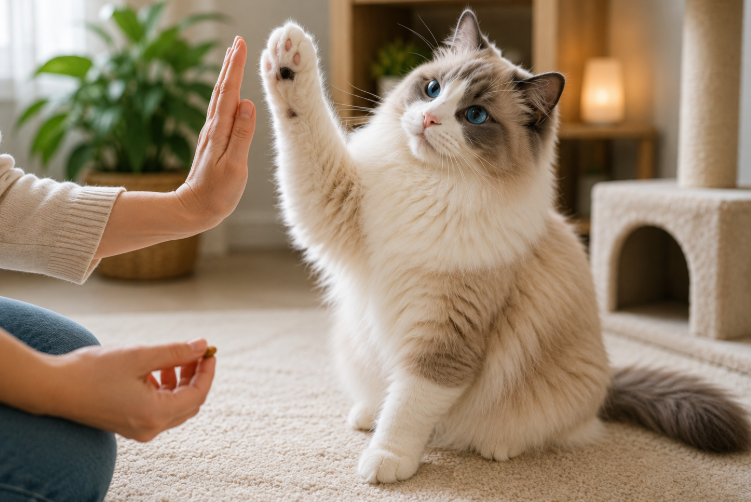
Some Ragdolls even learn tricks such as paw targeting, jumping onto specific surfaces, or retrieving toys lightly.
Training should always remain realistic and enjoyable rather than strict or demanding. Cats respond better to emotional engagement than forceful expectations.
Success comes gradually through repetition and positive experiences rather than immediate perfection.
Helping Ragdolls Feel Comfortable With Grooming
Grooming becomes much easier when introduced gradually and positively. Since Ragdolls have long silky coats, regular brushing remains essential for preventing tangles and excessive shedding.
Effective Ragdoll Cat Training Tips for grooming begin with short sessions and calm environments. Gentle brushing paired with treats or affection helps create positive emotional associations.
Many Ragdolls naturally tolerate grooming well because they enjoy attention and physical closeness. However, sudden rough handling may still create stress.
Owners should touch paws, ears, and tails gently during calm moments to increase comfort gradually. This desensitization helps reduce fear during nail trimming or cleaning routines.
Stopping sessions before frustration develops also improves long-term cooperation. Positive endings help maintain trust and confidence.
Consistency matters more than long sessions. Brief daily brushing often feels far easier for both cats and owners.
Reducing Biting and Rough Play
Kittens often bite during play because they naturally practice hunting instincts. However, owners should guide these behaviors carefully to prevent rough habits from continuing into adulthood.
Helpful Ragdoll Cat Training Tips for biting include redirecting attention toward toys immediately instead of using hands during play.
Interactive toys such as wand teasers or soft balls encourage healthy hunting behavior safely. Using hands directly during rough play may accidentally teach biting as acceptable interaction.
If biting occurs, calmly ending the play session often works better than loud reactions. Sudden yelling may create confusion or anxiety rather than learning.
Consistent boundaries remain extremely important. Mixed responses may encourage repeated testing behavior.
Most Ragdolls naturally develop gentler habits as emotional maturity increases, especially when owners reinforce calm interaction consistently.
Positive play experiences strengthen trust while reducing frustration and overstimulation.
Carrier and Travel Training
Many cats dislike carriers because they associate them only with stressful vet visits. However, gradual training can create much more positive experiences.
Ragdoll Cat Training Tips for carriers begin by leaving the carrier open inside the home regularly. Soft bedding and treats inside help create emotional comfort naturally.
Short positive sessions work best initially. Encouraging brief voluntary entry without forced confinement builds confidence gradually.
Once comfort improves, short car rides help desensitize cats to movement and unfamiliar sounds safely.
Calm praise and rewards during travel preparation reduce fear significantly over time.
Owners should avoid only using carriers during stressful events whenever possible. Positive everyday exposure helps carriers feel like safe resting spaces instead of frightening objects.
Travel training becomes especially valuable during emergencies or necessary veterinary visits.
Avoiding Common Training Mistakes
Many owners accidentally create confusion through inconsistent routines or emotional reactions. Understanding common mistakes helps improve training success greatly.
One major issue involves punishment-based methods. Harsh discipline usually damages trust and increases anxiety in emotionally sensitive breeds.
Effective Ragdoll Cat Training Tips always prioritize positive communication and emotional safety rather than fear.
Another common mistake involves unrealistic expectations. Cats learn differently from dogs and usually require more gradual repetition.
Overtraining also creates frustration. Short enjoyable sessions consistently produce better results than long exhausting lessons.
Inconsistent rules may confuse cats as well. Allowing behaviors sometimes while discouraging them later weakens learning clarity.
Owners should also avoid ignoring emotional needs during training. Ragdolls learn best when they feel safe, connected, and relaxed.
Patience and observation ultimately create the strongest long-term progress.
Building Long-Term Trust Through Training
Training should strengthen relationships rather than control behavior through fear. Ragdolls especially respond to emotional trust and gentle interaction.
Consistent Ragdoll Cat Training Tips help create healthier communication while improving confidence and emotional security naturally.
Daily routines such as feeding, grooming, and playtime all become training opportunities when approached calmly and consistently.
Cats that trust their owners usually cooperate more willingly during stressful situations like grooming, travel, or medical care.
Positive interaction also helps reduce anxiety and behavioral issues over time. Emotionally secure cats generally display calmer and healthier behavior overall.
Most importantly, successful training creates stronger companionship between owners and cats. Ragdolls naturally crave emotional connection, making trust-based learning especially effective.
Conclusion
Training a Ragdoll does not require strict discipline or complicated techniques. These affectionate and intelligent cats usually respond best to gentle guidance, positive reinforcement, and emotionally supportive routines.
The most effective Ragdoll Cat Training Tips focus on trust, consistency, and patience rather than punishment or force. Simple daily habits often create the strongest long-term behavioral improvements.
Whether teaching litter habits, grooming comfort, scratching boundaries, or basic commands, calm repetition remains extremely important. Small successful experiences gradually build confidence and emotional security.
Fortunately, Ragdolls naturally enjoy interaction and companionship, which makes training feel more rewarding and cooperative than many owners expect. Their loving personality and social intelligence often create excellent learning opportunities within daily life.
With patience and understanding, owners can build healthier routines, better communication, and stronger emotional bonds that last for years.
FAQ
- Are Ragdolls easier to train than other cat breeds?
Many Ragdolls respond well to positive reinforcement because they enjoy interaction and emotional connection with owners.
- What rewards work best during training?
Treats, gentle praise, affection, and interactive play often motivate cats effectively during short sessions.
- How long should daily training sessions last?
Most cats learn best through short five to ten minute sessions repeated consistently throughout the week.
- Can older cats still learn new habits?
Yes, adult cats can still learn successfully with patience, consistency, and positive experiences.
- Why should owners avoid punishment during training?
Harsh correction may create fear and stress, which often damages trust and slows learning progress.