Many cat owners admire Ragdolls for their beauty and gentle personality, but fewer people realize how intelligent they truly are. Smart Ragdoll Cats often surprise owners with their ability to learn routines, understand emotions, and adapt quickly to indoor life. While they may not display intelligence in loud or overly energetic ways, their calm behavior often hides a thoughtful and observant personality.
Unlike highly independent breeds that prefer isolation, Ragdolls usually pay close attention to people and household routines. They often notice feeding schedules, emotional moods, and daily habits faster than owners expect. Because of this, many people describe them as emotionally intelligent companions rather than simply affectionate pets.
These cats are also known for their strong social awareness. Many follow owners from room to room, observe activities carefully, and respond positively to interaction. Their curiosity, combined with their relaxed personality, creates a unique type of intelligence that feels highly connected to human companionship.
People researching Smart Ragdoll Cats often wonder whether these cats can learn commands, solve problems, or adapt well to training. Fortunately, Ragdolls commonly show impressive learning abilities when owners use patience, consistency, and positive reinforcement.
How Ragdolls Show Intelligence Differently
Cat intelligence does not always appear through dramatic tricks or constant activity. In fact, some of the smartest cats express intelligence quietly through observation and emotional awareness. Ragdolls often fit into this category perfectly.
Many Smart Ragdoll Cats learn by watching routines repeatedly. They recognize feeding times, understand where favorite toys are stored, and remember household patterns quickly. Some even anticipate owner behavior before anything happens.
For example, many Ragdolls wait near doors when they hear familiar sounds or follow owners toward the kitchen before meals appear. These behaviors show strong pattern recognition and memory.
Their emotional sensitivity also reflects intelligence. Ragdolls commonly respond to changes in mood or energy inside the home. Some stay close when owners feel sad or stressed, while others become more playful during relaxed moments.
Unlike highly reactive breeds, Ragdolls often process situations calmly before responding. This thoughtful behavior sometimes makes people underestimate their intelligence initially. However, long-term owners usually notice how observant and emotionally connected these cats become over time.
Social learning also plays a major role. Since Ragdolls enjoy companionship, they often learn behaviors faster through interaction with humans rather than complete independence.
Can Ragdolls Learn Commands and Tricks?
Many people feel surprised when they discover how trainable Ragdolls can be. These cats often respond well to repetition, praise, and reward-based learning. Because they enjoy human attention, training sessions usually feel less stressful compared to more stubborn breeds.
Smart Ragdoll Cats commonly learn simple commands like “come,” “sit,” or “stay” with consistent practice. Some even enjoy playing fetch or responding to their names regularly indoors.
Clicker training works especially well because it creates clear communication during learning sessions. Once the cat connects the sound with rewards, understanding develops more quickly.
Short training sessions produce the best results. Cats generally lose interest during long repetitive lessons, so five to ten minutes each day works better than extended practice.
Positive reinforcement matters greatly too. Treats, affection, and praise encourage learning while strengthening emotional trust. Harsh discipline usually creates confusion instead of improvement.
Many Ragdolls also learn household rules naturally over time. They often understand feeding locations, sleeping routines, and preferred behavior patterns through observation alone.
Their calm personality helps during training because they usually remain more patient and less reactive than extremely energetic breeds. This steady behavior often makes learning feel easier for first-time cat owners.
Problem-Solving Skills and Curiosity
Although Ragdolls appear relaxed much of the time, they still enjoy exploring and understanding their environment. Curiosity often reveals itself through quiet investigation rather than hyperactive behavior.
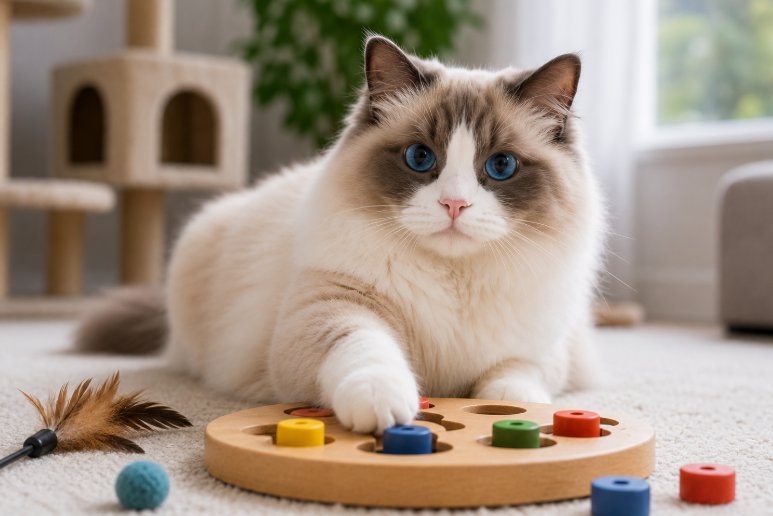
Many Smart Ragdoll Cats learn how to open doors, locate hidden treats, or solve simple puzzle toys surprisingly quickly. Puzzle feeders especially help reveal problem-solving abilities because cats must figure out how to access rewards.
Ragdolls also observe cause-and-effect relationships carefully. If they notice certain actions lead to food, attention, or playtime, they often repeat those behaviors intentionally.
Window watching offers another example of their curiosity. Many Ragdolls spend long periods observing birds, movement, and outdoor activity. This mental stimulation supports healthy cognitive function indoors.
Because they are highly observant, these cats sometimes imitate routines they see regularly. Some learn where owners store favorite items or understand daily schedules better than expected.
However, their intelligence usually appears calmer and more thoughtful than dramatic. Instead of constant climbing or chaos, Ragdolls often explore slowly and carefully while processing information around them.
Interactive toys and enrichment activities help strengthen these skills even further. Mental stimulation keeps indoor cats engaged while preventing boredom-related behavior problems.
Emotional Intelligence and Human Connection
One of the most unique qualities about Ragdolls is their emotional awareness. These cats commonly form deep bonds with their owners and often respond strongly to household emotions.
Many Smart Ragdoll Cats seem highly tuned into human behavior. They often recognize voice tones, facial expressions, and emotional energy surprisingly well. Because of this, owners frequently describe them as comforting companions.
Unlike aloof breeds that prefer independence, Ragdolls often seek emotional closeness naturally. Some sit beside owners during stressful moments, while others gently follow family members throughout the day for companionship.
This emotional connection may partly explain why Ragdolls adapt so well to indoor family life. They usually enjoy routines that involve regular interaction, affection, and shared quiet time.
Their sensitivity also means they respond best to calm environments. Loud punishment or chaotic routines may create stress more easily than with highly independent cats. Gentle communication usually produces stronger trust and cooperation.
Social intelligence becomes especially clear in multi-person households. Many Ragdolls recognize different family members individually and adjust behavior depending on the person interacting with them.
Because they crave companionship, these cats often prefer homes where someone spends time with them daily. Emotional engagement supports both mental health and long-term confidence.
How Indoor Living Supports Their Intelligence
Indoor environments strongly influence mental development in cats. Fortunately, Ragdolls usually adapt extremely well to indoor life when owners provide proper stimulation and engagement.
Smart Ragdoll Cats benefit from environments that encourage curiosity and exploration safely. Cat trees, puzzle feeders, window perches, and interactive toys all support cognitive health indoors.
Routine also strengthens learning. Since Ragdolls naturally observe household patterns closely, stable schedules help reinforce memory and confidence over time.
Window spaces provide especially valuable stimulation. Watching birds, weather, and movement outdoors keeps the mind active while reducing boredom indoors.
Interactive play remains important too. Feather wands, soft balls, and treat puzzles encourage problem-solving while supporting physical exercise. These activities also strengthen emotional bonding between cats and owners.
Some Ragdolls even enjoy leash training or simple indoor obstacle activities when introduced gradually. Their calm temperament often makes them more adaptable than many people expect.
Without enough stimulation, however, boredom may develop. Cats that lack enrichment sometimes become less active or emotionally withdrawn. Therefore, mental engagement should remain part of daily care routines.
Comparing Ragdolls to Other Intelligent Breeds
Many people compare Ragdolls to breeds like Siamese, Bengals, or Maine Coons when discussing intelligence. Although those breeds often display louder or more energetic learning styles, Ragdolls show intelligence differently.
Smart Ragdoll Cats usually focus more on emotional awareness and routine-based learning rather than constant stimulation or demanding behavior. Their calm personality sometimes hides how observant they truly are.
Unlike highly vocal breeds, Ragdolls often communicate quietly through body language and gentle interaction. However, their understanding of household patterns remains surprisingly advanced.
They may not climb curtains or constantly seek challenges like Bengals, but they often excel at emotional connection and indoor adaptability instead. Many owners prefer this balanced personality because it combines intelligence with calm companionship.
Ragdolls also tend to tolerate handling and training more comfortably than some intelligent but highly stubborn breeds. This cooperative nature often makes daily care easier for beginners.
Ultimately, intelligence appears differently across cat breeds. Ragdolls shine through emotional sensitivity, social learning, and relaxed observation rather than nonstop activity.
Ways to Keep Their Minds Active
Mental stimulation remains extremely important for indoor cats, especially intelligent breeds. Keeping Ragdolls mentally engaged supports healthier behavior and emotional well-being long-term.
Puzzle toys rank among the best tools for Smart Ragdoll Cats because they encourage problem-solving naturally. Food puzzles especially combine mental activity with feeding routines effectively.
Toy rotation also helps maintain curiosity. Cats often lose interest when the same toys remain available constantly. Changing options regularly creates fresh excitement indoors.
Interactive play sessions should happen daily whenever possible. Even short sessions improve focus, physical movement, and emotional bonding significantly.
Training games provide additional stimulation too. Teaching simple commands or practicing recall exercises helps reinforce communication and trust.
Cat trees and climbing shelves create opportunities for exploration and observation. Elevated spaces often increase confidence while supporting natural instincts safely indoors.
Most importantly, companionship itself stimulates many Ragdolls emotionally and mentally. Since these cats enjoy social interaction deeply, quality time with owners becomes one of the strongest forms of enrichment available.
Signs Your Ragdoll Is Highly Intelligent
Some behaviors clearly suggest advanced learning and awareness. Owners who recognize these signs often better understand their cat’s needs and personality.
Many Smart Ragdoll Cats quickly recognize names, routines, and sounds associated with food or attention. Some even respond consistently when called across the house.
Others display strong memory by locating favorite toys, hidden treats, or familiar resting spots repeatedly. Some cats also learn how to communicate needs through specific behaviors or vocal patterns.
Observation skills become obvious too. Ragdolls often watch owners carefully while processing environmental changes quietly before reacting.
Social sensitivity may appear through emotional responses as well. Cats that seek comfort during stressful moments or stay close during illness often display strong emotional awareness.
Adaptability also reflects intelligence. Ragdolls that adjust calmly to new routines, environments, or training exercises usually possess excellent learning ability.
Conclusion
Ragdolls are far more intelligent than many people initially expect. Their calm personality may seem relaxed on the surface, but underneath that gentle behavior is a highly observant and emotionally aware companion. From learning routines and commands to recognizing emotions and solving simple problems, these cats consistently demonstrate thoughtful intelligence in everyday life.
Smart Ragdoll Cats thrive best in homes that provide emotional connection, mental stimulation, and predictable routines. Their social nature allows them to bond deeply with people while adapting comfortably to indoor living.
Although they may not express intelligence through nonstop activity, their emotional sensitivity and learning ability make them incredibly rewarding companions. Owners who engage with them regularly often discover just how observant, adaptable, and emotionally connected these beautiful cats truly are.
FAQ
1. Can Ragdolls learn commands easily?
Yes, many respond well to simple commands and routines when training uses rewards and consistency.
2. Do these cats understand human emotions?
Many owners believe they do because Ragdolls often react calmly to emotional changes at home.
3. Are puzzle toys good for indoor cats?
Yes, puzzle toys support mental stimulation and help prevent boredom-related behavior problems indoors.
4. Why do Ragdolls follow owners around the house?
They are highly social cats that enjoy companionship and observing daily household activity closely.
5. Can indoor cats stay mentally healthy long-term?
Absolutely. Regular play, enrichment, and interaction help support strong mental and emotional well-being.