Aggressive Ragdoll Cat Behavior is usually much less common compared to many other cat breeds. Ragdolls are widely known for their calm temperament, affectionate nature, and emotionally gentle personality. However, like all animals, they can still become aggressive under certain conditions. Understanding why this happens helps owners respond safely and prevent long-term behavioral problems.
Many people assume aggression automatically means a cat has a bad personality. In reality, feline aggression often develops because of fear, pain, stress, overstimulation, or environmental discomfort. Even gentle breeds may react defensively when emotional or physical needs are ignored.
Fortunately, most Ragdolls naturally prefer peaceful interaction over confrontation. Their relaxed personality often makes them easier to calm and redirect compared to highly reactive breeds.
Learning the causes, warning signs, and prevention methods behind aggression helps owners build healthier emotional relationships with their cats. More importantly, understanding feline behavior reduces fear and creates safer, more supportive home environments for both pets and families.
Are Ragdolls Naturally Aggressive?
Most Aggressive Ragdoll Cat Behavior situations happen because of outside factors rather than natural breed personality. Ragdolls are generally considered one of the gentlest and most emotionally relaxed cat breeds.
Many owners describe them as affectionate, patient, and socially connected cats that enjoy calm companionship and stable routines. Unlike highly territorial breeds, Ragdolls usually avoid conflict whenever possible.
However, calm personality does not mean aggression can never happen. Any cat may react defensively if frightened, overstimulated, sick, or emotionally stressed.
Ragdolls often show discomfort more quietly than aggressive breeds initially. Instead of immediate attacking, they may first withdraw, hide, flatten their ears, or avoid interaction before stronger reactions develop.
Because their personality remains naturally gentle, sudden aggression often signals an underlying problem requiring attention rather than intentional hostility.
Understanding this difference helps owners respond with patience instead of punishment or fear.
Common Causes of Aggression
Several factors may trigger Aggressive Ragdoll Cat Behavior even in emotionally calm cats. Fear remains one of the most common causes because frightened cats instinctively defend themselves when feeling trapped or threatened.
Pain also frequently contributes to aggression. Injuries, dental disease, arthritis, digestive discomfort, or hidden illness may cause cats to react negatively when touched or approached.
Overstimulation presents another common issue. Some cats enjoy affection initially but become overwhelmed during prolonged petting or rough interaction.
Environmental stress may additionally trigger defensive behavior. Loud noises, unfamiliar animals, chaotic homes, or sudden routine changes sometimes increase emotional tension significantly.
Territorial insecurity occasionally develops in multi-pet households as well, especially during improper introductions or resource competition.
Fortunately, identifying the underlying cause usually improves treatment and prevention much more effectively than focusing only on the aggressive behavior itself.
How Fear-Based Aggression Develops
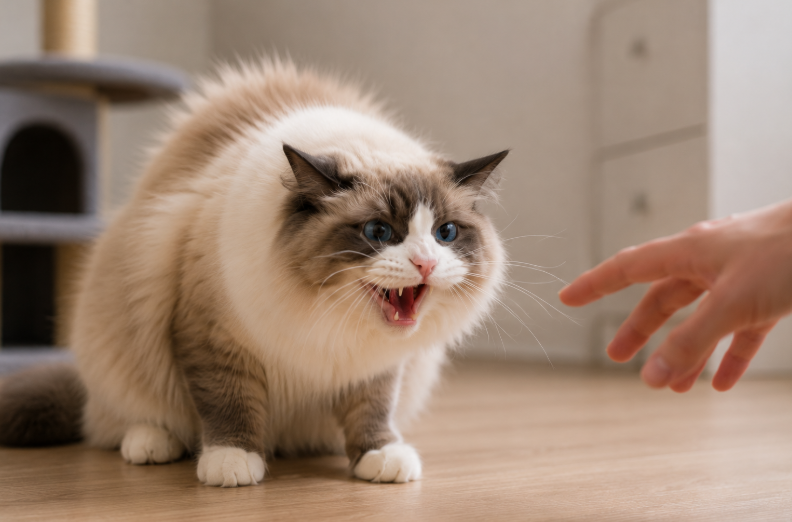
Fear-related Aggressive Ragdoll Cat Behavior often develops when cats feel unsafe or unable to escape stressful situations. Even affectionate cats may scratch, bite, or hiss if they believe danger is unavoidable.
Common triggers include loud environments, rough handling, unfamiliar visitors, or traumatic experiences involving restraint or punishment.
Cats experiencing fear aggression usually display warning signs first. Flattened ears, crouched posture, wide pupils, puffed fur, or tail twitching often indicate emotional distress before physical aggression occurs.
Owners should never force interaction when these signs appear. Giving cats space and allowing calm retreat usually reduces escalation naturally.
Building emotional confidence gradually helps fearful cats feel safer over time. Quiet environments, gentle routines, and predictable interaction often improve emotional stability significantly.
Punishment worsens fear aggression in most cases because it reinforces anxiety and mistrust instead of solving the underlying emotional problem.
Pain and Medical Problems
Health conditions remain one of the most overlooked causes of Aggressive Ragdoll Cat Behavior. Cats naturally hide pain well, which means behavioral changes may become the first visible symptom owners notice.
A normally affectionate Ragdoll that suddenly becomes irritable, withdrawn, or defensive may require veterinary evaluation immediately.
Dental disease, joint pain, urinary problems, digestive discomfort, skin irritation, or injury all may contribute to aggression when touched or approached.
Pain-related aggression often appears suddenly without obvious emotional triggers. Cats may hiss during grooming, resist handling, or react negatively to routine interaction that previously felt comfortable.
Because Ragdolls are usually emotionally gentle, sudden personality shifts deserve careful attention.
Veterinary examinations help identify hidden physical discomfort before conditions worsen unnecessarily.
Treating underlying medical problems often improves aggressive behavior dramatically once physical pain decreases.
Overstimulation During Petting
Some Aggressive Ragdoll Cat Behavior occurs during physical affection because cats become overstimulated after extended touching or repetitive handling.
Ragdolls generally enjoy affection more than many breeds, yet every cat still has personal comfort limits. Continuous petting sometimes overwhelms the nervous system gradually, leading to defensive reactions.
Tail twitching, skin rippling, flattened ears, or sudden body tension often signal overstimulation before biting or scratching occurs.
Owners should observe body language carefully rather than assuming all affection remains welcome indefinitely.
Short calm petting sessions usually work better than excessive handling. Many cats prefer gentle strokes around the cheeks, chin, or shoulders instead of constant full-body contact.
Respecting emotional boundaries strengthens trust while reducing stress significantly.
Learning individual preferences helps prevent accidental overstimulation and creates healthier interaction long term.
Territorial and Resource Aggression
Territorial conflict occasionally contributes to Aggressive Ragdoll Cat Behavior, especially in homes with multiple animals. Although Ragdolls usually avoid confrontation, resource insecurity may still create emotional stress.
Food bowls, litter boxes, sleeping areas, or favorite resting spots sometimes trigger defensive reactions when cats feel competition exists.
Proper environmental setup greatly reduces territorial tension naturally. Multiple litter boxes, feeding stations, scratching posts, and resting areas help prevent resource guarding.
Slow introductions also remain extremely important when adding new pets to the home. Sudden forced interaction often increases fear and territorial insecurity significantly.
Cats generally adjust better when introductions happen gradually with supervised positive experiences.
Fortunately, most Ragdolls adapt peacefully when emotional safety and environmental balance remain consistent.
Aggression Caused by Stress
Stress-related Aggressive Ragdoll Cat Behavior often develops gradually rather than suddenly. Emotionally sensitive cats may react physically when environmental tension becomes overwhelming over time.
Loud households, unpredictable schedules, frequent visitors, isolation, or major life changes sometimes increase emotional instability significantly.
Stress symptoms may include hiding, appetite changes, overgrooming, excessive vocalization, litter problems, or increased irritability.
Because Ragdolls thrive through stability and companionship, emotionally chaotic environments sometimes affect them more deeply than highly independent breeds.
Fortunately, calming routines help reduce stress naturally. Predictable feeding times, quiet resting spaces, regular interaction, and emotional consistency all support healthier behavior.
Interactive play and enrichment also help release nervous energy positively while strengthening emotional confidence.
Understanding emotional sensitivity remains extremely important when managing feline stress safely.
How to Calm an Aggressive Ragdoll
Responding calmly remains one of the most effective ways to manage Aggressive Ragdoll Cat Behavior safely. Yelling, chasing, or physical punishment usually increases fear and escalates emotional tension further.
Instead, owners should create physical space while allowing the cat time to calm independently. Most emotionally overwhelmed cats relax more quickly when not cornered or forced into interaction.
Soft voices and slow movements help reduce stimulation naturally. Sudden gestures or loud reactions often worsen defensive behavior unintentionally.
Once the cat feels calm again, owners should evaluate potential triggers carefully. Identifying whether fear, pain, overstimulation, or stress caused the reaction improves future prevention significantly.
Positive reinforcement and emotional patience generally create healthier long-term results than forceful correction.
If aggression becomes severe, persistent, or unpredictable, veterinary evaluation or professional behavioral guidance may become necessary.
The Role of Socialization
Early socialization strongly influences emotional stability and may reduce future Aggressive Ragdoll Cat Behavior significantly. Kittens exposed gently to handling, household sounds, grooming, and positive human interaction often develop stronger emotional confidence later.
However, socialization should always remain calm and respectful rather than overwhelming. Forced exposure sometimes increases fear instead of building trust.
Positive experiences during kittenhood help create healthier responses to visitors, grooming, travel, and routine handling throughout adulthood.
Adult cats may still improve through gradual positive exposure and emotional consistency as well. Patience becomes especially important for rescued or previously stressed cats.
Building confidence slowly helps emotionally sensitive cats feel safer within their environment naturally.
Can Ragdolls Become Aggressive With Children?
Most Ragdolls behave very gently around respectful children. However, Aggressive Ragdoll Cat Behavior may still appear if children ignore emotional boundaries or handle cats roughly.
Pulling tails, loud chasing, sudden grabbing, or disturbing sleeping cats sometimes trigger defensive reactions even in calm breeds.
Teaching children proper feline interaction remains extremely important. Gentle touching, quiet voices, and recognizing warning signs all help create safer relationships.
Cats should always have access to quiet retreat areas where they can rest undisturbed whenever needed.
Supervised interaction helps prevent accidental overstimulation or fear-based reactions while building healthier trust naturally.
Fortunately, many Ragdolls become excellent family companions when treated respectfully and emotionally supported consistently.
When to Seek Professional Help
Occasional defensive behavior does not automatically indicate serious problems. However, persistent Aggressive Ragdoll Cat Behavior may require professional evaluation when symptoms become severe or unpredictable.
Sudden personality changes, repeated biting, frequent attacks, or extreme fear responses often signal underlying emotional or medical issues needing attention.
Veterinarians help rule out pain, illness, neurological conditions, or hormonal imbalances contributing to aggression.
Certified feline behavior specialists may additionally help identify environmental triggers and develop personalized behavior improvement plans.
Early intervention usually improves long-term outcomes significantly because behavioral patterns become harder to change over time if ignored.
Seeking help should never feel embarrassing. Responsible owners prioritize safety, emotional health, and professional guidance whenever needed.
Conclusion
Although Ragdolls are widely known for their calm and affectionate nature, Aggressive Ragdoll Cat Behavior can still develop under certain conditions. Fear, pain, overstimulation, stress, territorial insecurity, and medical issues all may contribute to defensive reactions even in gentle cats.
Fortunately, aggression rarely reflects a naturally hostile personality in this breed. Most situations improve greatly when owners identify underlying causes and respond with patience, emotional awareness, and consistent care.
Calm environments, positive reinforcement, healthy routines, and respectful interaction all help support emotional stability naturally. More importantly, understanding feline body language allows owners to recognize stress before aggressive reactions escalate.
With proper care, most Ragdolls remain affectionate, emotionally balanced, and deeply loyal companions throughout life. Thoughtful prevention and compassionate handling create healthier relationships while helping these gentle cats feel safe, secure, and emotionally understood every day.
FAQ
- Are Ragdolls naturally aggressive cats?
No, they are generally known for calm, affectionate, and emotionally gentle personalities.
- What usually causes sudden aggression in cats?
Fear, pain, overstimulation, illness, stress, or territorial insecurity commonly trigger defensive behavior.
- Can medical problems cause personality changes?
Yes, pain or hidden illness may cause sudden irritability, hiding, or aggressive reactions.
- How should owners respond during aggressive episodes?
Remain calm, give space, avoid punishment, and identify possible emotional or physical triggers.
- Do Ragdolls usually get along with children?
Yes, most adapt well to respectful children when interaction remains gentle and emotionally safe.