Ragdoll cats are known for their gentle personality, affectionate nature, and calm behavior. However, many owners still wonder how to train them effectively without stress or frustration. The good news is that you can easily train your Ragdoll cat with patience, consistency, and positive reinforcement. Unlike some independent breeds, Ragdolls naturally enjoy interaction with humans, which makes training much smoother and more rewarding.
When you first bring your kitten home, everything feels new and exciting. At the same time, your cat may feel nervous or unsure about the environment. Because of this, early routines matter a lot. If you start training slowly from the beginning, your cat will quickly learn what behaviors are expected inside the home. More importantly, positive experiences help build trust between you and your pet.
One of the easiest ways to train your Ragdoll cat is by using rewards instead of punishment. Cats respond much better to praise, treats, and affection. Harsh discipline often creates fear and confusion. Instead, reward good behavior immediately so your cat connects the action with something positive. Over time, this approach creates strong habits that last for years.
Why Ragdoll Cats Respond Well to Training
Ragdolls are often described as “puppy-like” because they enjoy companionship and human interaction. Many even follow their owners from room to room. Since they naturally seek attention, they are usually more willing to learn routines and commands compared to other breeds.
In addition, Ragdolls tend to have a calm temperament. They rarely act aggressively, and they generally adapt well to indoor living. This relaxed personality helps during training sessions because the cat is less likely to become defensive or overly stubborn. Even better, their intelligence allows them to recognize patterns quickly.
Although every cat has a unique personality, most Ragdolls enjoy routine. They like predictable feeding times, familiar spaces, and regular interaction. Therefore, keeping a consistent schedule makes training easier. When your cat knows what to expect each day, it feels safer and more confident.
Another reason many owners successfully train your Ragdoll cat is the breed’s social nature. These cats often enjoy praise and physical affection. A soft voice, gentle petting, and healthy treats can motivate them far more effectively than negative corrections ever could.
Starting With Basic Household Training
Before teaching tricks or commands, focus on everyday habits. Household training forms the foundation for a well-behaved indoor cat. Fortunately, Ragdolls usually learn these basics quickly.
Litter box training should begin immediately after bringing your kitten home. Place the litter box in a quiet and accessible area where the cat feels secure. Show your kitten the box several times during the first few days, especially after meals or naps. Most Ragdolls instinctively understand litter use, but consistency still matters.
Cleanliness also plays a major role. Cats dislike dirty litter boxes, so regular cleaning prevents accidents elsewhere in the house. If accidents happen, avoid yelling or punishment. Instead, calmly clean the area and redirect your cat to the proper spot.
Scratching behavior is another important area to address early. Cats naturally scratch to stretch muscles and mark territory. Rather than trying to stop the behavior completely, redirect it toward scratching posts or pads. Place these near furniture or sleeping areas where scratching often occurs. You can also encourage use by adding catnip or toys nearby.
As you train your Ragdoll cat, remember that repetition matters more than long sessions. Short daily practice sessions work best because cats lose interest quickly. Even five to ten minutes each day can create impressive results over time.
Teaching Simple Commands and Routines
Many people are surprised to learn that cats can understand commands just like dogs. Ragdolls, in particular, often respond well to voice cues because they enjoy interacting with people.
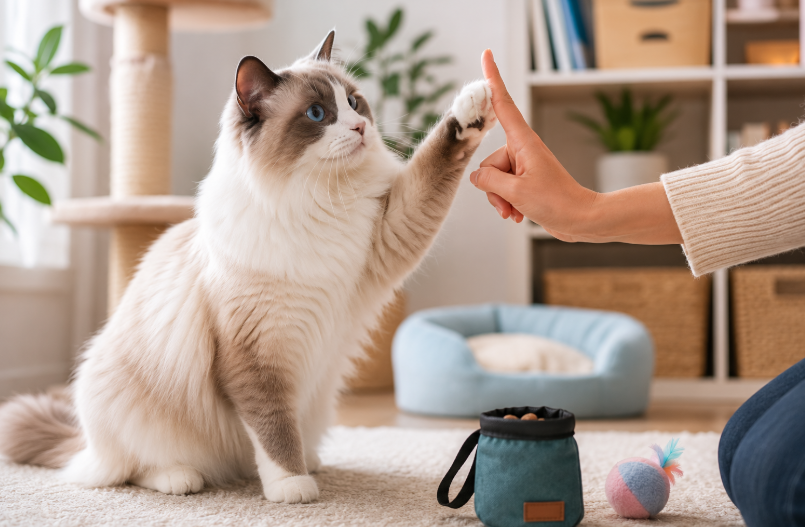
Start with easy commands such as “come,” “sit,” or “stay.” Use your cat’s name first to gain attention. Then say the command clearly and reward the desired action immediately. Treats work well in the beginning because they create a strong positive connection.
For example, if you want your cat to come when called, begin in a quiet room without distractions. Say your cat’s name followed by “come.” When the cat approaches, reward it instantly with praise or a small treat. Repeating this process daily strengthens the behavior naturally.
Clicker training can also help if you want faster results. A clicker creates a distinct sound that marks correct behavior. Once the cat associates the click with rewards, learning becomes easier and more precise. Many owners successfully train your Ragdoll cat using this method because the breed responds well to clear communication.
Routine training is equally important. Feeding your cat at the same time each day encourages stability and good behavior. Likewise, regular play sessions help release energy and reduce boredom-related problems. Cats that receive enough mental stimulation are usually calmer and more cooperative indoors.
Using Positive Reinforcement Effectively
Positive reinforcement is the heart of successful cat training. Instead of focusing on mistakes, reward the behaviors you want repeated. This approach builds trust while encouraging learning in a natural way.
Timing is extremely important during training. Rewards should happen immediately after the correct action. If you wait too long, the cat may not connect the reward with the behavior. Quick responses create clearer communication.
Treats can be useful, but moderation matters. Choose healthy options and use tiny portions to avoid overfeeding. In addition, combine treats with verbal praise and gentle affection. Over time, your cat may respond to praise alone.
Consistency also helps reinforce learning. If one family member allows a behavior while another discourages it, confusion develops quickly. Everyone in the household should follow the same rules and routines.
While you train your Ragdoll cat, patience remains essential. Some behaviors take longer to develop than others. If progress slows, avoid frustration and return to simpler steps. Calm repetition often produces the best long-term results.
Preventing Common Behavior Problems
Even gentle Ragdolls can develop unwanted habits if their needs are ignored. Fortunately, many common problems are preventable through proper training and daily enrichment.
Boredom is one of the biggest causes of destructive behavior in indoor cats. Without stimulation, cats may scratch furniture, knock objects over, or demand constant attention. Interactive toys, climbing trees, and puzzle feeders help keep their minds active.
Nighttime activity can also frustrate owners. Since cats naturally become active at dawn and dusk, some may run around the house late at night. To reduce this behavior, schedule energetic play sessions during the evening. Physical activity before bedtime often helps cats relax overnight.
Some Ragdolls develop separation anxiety because they bond deeply with their owners. If your cat becomes distressed when left alone, provide comforting routines and enrichment activities. Leaving soft music on or offering puzzle toys may help reduce stress.
If you want to train your Ragdoll cat successfully, avoid encouraging bad habits unintentionally. For example, giving attention every time the cat meows loudly may reinforce excessive vocalization. Instead, reward calm behavior and ignore attention-seeking noise when appropriate.
Socialization and Indoor Confidence
Socialization plays a major role in raising a confident and friendly cat. Early positive experiences help Ragdolls adapt to visitors, children, and other pets more comfortably.
Introduce new experiences gradually. Loud noises or sudden changes may overwhelm a young kitten. Allow your cat to explore unfamiliar situations at its own pace while providing reassurance through calm interaction.
If you have other pets, introductions should happen slowly. Separate spaces during the beginning help reduce tension. Gradual supervised meetings allow both animals to adjust safely. Many Ragdolls eventually become highly social companions when introductions are handled carefully.
Carrier training is another valuable skill. Many cats fear travel because they only see carriers during vet visits. To prevent this association, leave the carrier open at home with blankets or treats inside. This helps the cat view the carrier as a safe and familiar place.
As you train your Ragdoll cat, building confidence matters just as much as teaching commands. Confident cats handle new experiences with less fear and stress, which improves overall behavior significantly.
Making Training Fun and Stress-Free
Training should feel enjoyable for both you and your cat. Long or frustrating sessions often reduce progress because cats lose interest quickly. Instead, focus on short and rewarding interactions.
Play-based learning works especially well with Ragdolls. Toys can motivate movement and attention naturally. Wand toys, balls, and feather teasers create opportunities to practice commands during playtime.
In addition, always end sessions positively. Finishing with praise or a favorite treat leaves your cat feeling successful. This encourages excitement for future sessions rather than avoidance.
Body language also matters during training. Cats notice tone of voice, posture, and facial expressions. Calm energy helps your cat feel safe and relaxed. On the other hand, loud reactions may create fear or resistance.
Many owners discover that the easiest way to train your Ragdoll cat is simply by building a strong relationship first. Trust forms the foundation of all successful training because cats learn best when they feel secure.
Long-Term Benefits of Proper Training
Well-trained cats usually experience less stress and enjoy better relationships with their owners. Training creates clearer communication, which reduces confusion and frustration inside the home.
A trained Ragdoll is often easier to groom, transport, and manage during vet visits. Since the breed has a soft semi-long coat, grooming routines are especially important. Introducing brushing early helps your cat accept handling more comfortably.
Training also improves safety. Commands like “come” or “stay” may help prevent dangerous situations around doors or unfamiliar spaces. Additionally, mentally stimulated cats often display fewer destructive behaviors.
As your cat grows older, established routines continue to provide comfort and structure. Senior cats especially benefit from familiar habits because routines reduce anxiety and support emotional well-being.
When you consistently train your Ragdoll cat using patience and positive reinforcement, the results become rewarding for both of you. Over time, your cat develops confidence, trust, and behaviors that make everyday life easier and more enjoyable.
Conclusion
Training a Ragdoll cat does not need to feel difficult or overwhelming. In fact, this affectionate breed naturally responds well to gentle guidance, positive reinforcement, and consistent routines. By starting with simple household habits and gradually introducing commands, you can shape good behavior without creating stress or fear.
The key is patience. Short daily sessions, clear communication, and rewards help your cat learn effectively over time. More importantly, training strengthens the bond between you and your pet. Since Ragdolls thrive on companionship, they often enjoy the interaction just as much as the rewards themselves.
Whether you are teaching litter habits, scratching behavior, or simple commands, staying calm and consistent will produce the best results. As you continue to train your Ragdoll cat, you will likely notice improved confidence, better behavior, and a deeper connection that lasts for years.
FAQ
1. How long does it take to train a Ragdoll kitten?
Most Ragdoll kittens learn basic routines within a few weeks. However, advanced behaviors may take several months of consistent practice.
2. Are Ragdoll cats easier to teach than other breeds?
Yes, many owners find them easier to teach because they are social, calm, and highly people-oriented.
3. What rewards work best during training sessions?
Small treats, praise, gentle petting, and interactive play usually work very well for motivating Ragdolls.
4. Can older cats still learn new behaviors?
Absolutely. Adult cats can still develop new habits and commands with patience and regular positive reinforcement.
5. Why does my cat ignore commands sometimes?
Cats may lose focus due to distractions, stress, or boredom. Shorter sessions and better rewards often improve attention quickly.