Ragdoll cats are famous for their calm personality, affectionate nature, and beautiful appearance. Because of their gentle temperament, many owners prefer keeping them indoors where they remain safe and comfortable. However, indoor living also comes with responsibilities that every owner should understand. Indoor Ragdoll Cat Care involves much more than food and shelter. These cats need attention, stimulation, grooming, and emotional connection to thrive in a home environment.
Unlike highly independent breeds, Ragdolls often stay close to their owners throughout the day. They enjoy companionship and usually dislike long periods alone. As a result, creating a healthy indoor routine becomes essential for both physical and emotional well-being. Fortunately, caring for a Ragdoll indoors is not difficult when you understand their needs and habits.
Many first-time owners assume indoor cats require less care because they stay protected from outdoor dangers. While indoor living reduces certain risks, it also means owners must provide exercise, enrichment, and mental stimulation. Without those things, cats can become bored, overweight, or anxious. Therefore, understanding the basics of Indoor Ragdoll Cat Care helps prevent many common health and behavior issues before they begin.
Creating a Comfortable Indoor Environment
A calm and secure environment helps Ragdoll cats feel relaxed and confident. Since these cats spend most of their lives indoors, their surroundings play a major role in their happiness. Start by providing quiet resting spaces throughout the home. Ragdolls love soft beds, cozy blankets, and sunny windows where they can relax peacefully during the day.
Temperature also matters more than many owners realize. Although Ragdolls have thick coats, they still prefer moderate indoor temperatures. Extremely hot rooms may cause discomfort, especially during warmer months. Therefore, proper airflow and cool resting spots help maintain comfort year-round.
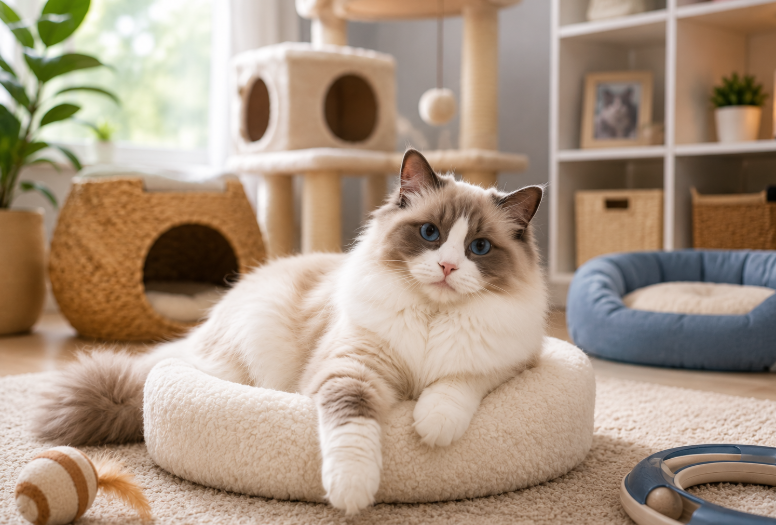
Vertical spaces are another important part of Indoor Ragdoll Cat Care. Cat trees, shelves, and climbing towers encourage healthy movement while giving your cat safe places to observe the environment. Even calm cats enjoy climbing occasionally because it supports natural instincts and curiosity.
In addition, indoor cats need private areas where they can retreat when feeling overwhelmed. Loud visitors, children, or sudden changes sometimes create stress. Quiet hiding spots help your cat relax and regain confidence when needed.
Cleanliness also contributes to comfort. Food bowls, bedding, and litter boxes should stay clean every day. Since Ragdolls are naturally tidy animals, dirty environments may lead to stress or unwanted behavior.
Feeding Habits That Support Long-Term Health
Nutrition forms the foundation of good health for indoor cats. Because indoor Ragdolls tend to live calmer lifestyles, portion control becomes especially important. Overfeeding can quickly lead to weight gain, which places stress on joints and internal organs.
Choose high-quality cat food that contains real protein sources and balanced nutrients. Many owners combine wet and dry food to support hydration and dental health. Wet food adds moisture to the diet, while dry kibble may help reduce plaque buildup.
Fresh water should always remain available in multiple locations around the home. Some Ragdolls drink more when using pet fountains because moving water feels cleaner and more appealing. Proper hydration supports kidney health and digestion over time.
As part of Indoor Ragdoll Cat Care, feeding schedules should remain consistent. Cats generally feel more secure when meals happen at regular times each day. Predictable routines also reduce begging behavior and overeating.
Treats can help strengthen bonding, but moderation matters. Too many snacks may create unhealthy weight gain. Instead, use treats occasionally during play or training sessions. Small rewards often work just as well as large portions.
Monitoring your cat’s weight regularly helps detect problems early. If your Ragdoll becomes less active or starts gaining excess weight, adjusting diet and exercise quickly can prevent more serious health concerns later.
The Importance of Daily Grooming
Ragdolls have beautiful semi-long coats that require regular maintenance. Although their fur mats less than some long-haired breeds, grooming still remains essential. Brushing several times each week helps remove loose fur, reduce tangles, and minimize shedding around the home.
Many Ragdolls actually enjoy brushing because it feels relaxing and comforting. Start grooming sessions gently while your cat is calm. Soft brushes usually work best because they prevent pulling or discomfort. In addition, regular grooming creates bonding opportunities between you and your pet.
Hairballs are another reason grooming matters. Indoor cats spend a lot of time cleaning themselves, which means they swallow loose fur regularly. Frequent brushing reduces the amount of hair entering the digestive system.
Nail trimming should also become part of your Indoor Ragdoll Cat Care routine. Indoor cats may not wear down nails naturally like outdoor cats do. Long nails can snag on furniture or become uncomfortable during walking. Short and gentle trimming sessions every few weeks help prevent problems.
Ear and eye checks are equally important. Watch for redness, unusual discharge, or strong odors that may signal infection. Early attention often prevents minor issues from becoming serious health concerns.
Dental care deserves attention too. Many owners overlook oral health until problems appear. However, brushing your cat’s teeth or using dental treats can reduce plaque buildup and improve long-term health significantly.
Keeping Indoor Cats Active and Mentally Stimulated
Although Ragdolls appear relaxed most of the time, they still need daily activity to stay healthy. Indoor cats often face limited opportunities for natural exercise, so owners must encourage movement through play and enrichment.
Interactive toys work especially well because they mimic hunting behavior. Feather wands, soft balls, and puzzle toys help stimulate both the body and mind. Short play sessions several times each day often produce better results than one long session.
Rotation also helps maintain interest. Cats may ignore toys that remain available constantly. Switching toys every few days keeps activities fresh and exciting.
Window perches offer another excellent form of enrichment. Watching birds, people, and outdoor movement provides entertainment that reduces boredom indoors. Some owners even place bird feeders outside windows to create additional stimulation safely.
Indoor Ragdoll Cat Care should always include social interaction as well. These cats enjoy companionship and usually prefer being near family members. Spending quality time together helps reduce loneliness and emotional stress.
Training sessions can also improve mental stimulation. Many Ragdolls learn simple commands, tricks, and routines surprisingly quickly. Positive reinforcement using praise or treats encourages learning while strengthening trust.
Without proper stimulation, indoor cats sometimes develop destructive habits. Excessive scratching, overeating, or nighttime restlessness often result from boredom rather than disobedience. Therefore, active engagement remains essential for maintaining balanced behavior.
Managing Litter Box Hygiene and Indoor Habits
Litter box care strongly affects both cleanliness and behavior. Ragdolls usually prefer quiet and private bathroom areas away from heavy foot traffic. Placing litter boxes in calm locations encourages regular use and reduces stress.
Most experts recommend having one more litter box than the number of cats in the home. This setup prevents territorial issues while improving comfort. For example, two cats generally need three boxes.
Daily scooping is extremely important because cats dislike dirty litter. Strong odors or waste buildup may lead to accidents elsewhere in the house. In addition, complete litter changes and box cleaning should happen regularly to maintain hygiene.
Choosing the right litter also matters. Many Ragdolls prefer soft, unscented litter because strong fragrances can irritate sensitive noses. Testing a few safe options helps determine your cat’s preference.
As part of Indoor Ragdoll Cat Care, owners should pay attention to sudden litter box changes. Avoiding the box may signal stress, discomfort, or health problems that require veterinary attention.
Scratching behavior should also be managed carefully indoors. Cats scratch naturally to stretch muscles and mark territory. Instead of stopping the behavior completely, redirect it toward scratching posts or pads placed around the home.
Understanding Emotional Needs and Social Behavior
Ragdolls are deeply social cats that form strong emotional bonds with their owners. Unlike some breeds that prefer independence, Ragdolls often seek constant companionship. Because of this, emotional care plays a major role in their overall well-being.
Loneliness may become a problem if a Ragdoll spends many hours alone each day. Some cats develop anxiety or depression without enough interaction. Leaving toys, puzzle feeders, or calming background sounds may help reduce stress during quiet periods.
Gentle communication also strengthens trust. Ragdolls usually respond well to calm voices, soft affection, and predictable routines. Loud punishment or harsh reactions may damage confidence and create fear.
Indoor Ragdoll Cat Care becomes easier when owners recognize body language. Slow blinking, relaxed posture, and soft purring usually indicate comfort and trust. Meanwhile, hiding or flattened ears may signal stress or discomfort.
Introducing new pets or visitors should happen gradually. Even social cats need time to adjust to unfamiliar situations. Slow introductions reduce anxiety while helping your cat feel safe and secure.
Children should also learn respectful handling techniques. Although Ragdolls tolerate gentle attention well, rough handling may still create stress or injury. Supervised interaction keeps everyone comfortable and safe.
Health Monitoring and Veterinary Care
Regular health monitoring helps indoor cats live longer and healthier lives. Even though indoor Ragdolls face fewer outdoor dangers, they still require preventive veterinary care.
Annual wellness exams allow veterinarians to identify problems early. Vaccinations, dental checks, and parasite prevention remain important even for indoor pets. Some parasites and illnesses can still enter the home environment through shoes, clothing, or open windows.
Weight monitoring also plays a critical role in Indoor Ragdoll Cat Care. Because these cats enjoy lounging, inactivity sometimes leads to obesity. Maintaining a healthy weight supports joints, heart health, and mobility.
Owners should watch for subtle changes in appetite, energy, grooming habits, or litter box use. Cats often hide illness until symptoms become more advanced. Therefore, early observation may help prevent serious complications.
Stress reduction supports long-term health as well. Calm environments, stable routines, and regular interaction contribute positively to emotional and physical wellness. Cats that feel secure often experience fewer stress-related behaviors and digestive problems.
Pet insurance may also provide financial support for unexpected emergencies or chronic conditions. Since veterinary costs can rise quickly, planning ahead often reduces future stress for owners.
Conclusion
Caring for a Ragdoll indoors involves much more than simply keeping the cat inside the house. These affectionate and social companions thrive when they receive attention, structure, grooming, and enrichment every day. Fortunately, Indoor Ragdoll Cat Care becomes much easier once you understand their unique personality and needs.
Creating a calm environment, providing balanced nutrition, and encouraging regular activity all contribute to a healthier and happier cat. In addition, emotional support and social interaction play a huge role in maintaining confidence and comfort indoors.
When owners stay consistent with routines and preventive care, Ragdolls often become incredibly loyal and loving companions for many years. Their gentle personality makes them wonderful indoor pets, especially in homes that value companionship and calm interaction. With patience, attention, and proper care, your indoor Ragdoll can enjoy a safe, fulfilling, and comfortable life every single day.
FAQ
1. How often should I groom a Ragdoll indoors?
Most indoor Ragdolls benefit from brushing at least three times each week to reduce shedding and prevent tangles.
2. Do these cats need a lot of exercise indoors?
Yes, they still need daily movement and mental stimulation through play, climbing, and interactive toys.
3. What type of food works best for indoor cats?
High-quality protein-rich food with balanced nutrients supports healthy weight and overall wellness indoors.
4. Why does my cat follow me around constantly?
Ragdolls are naturally social and affectionate, so they often stay close to their owners throughout the day.
5. Can indoor cats become lonely easily?
Yes, many Ragdolls dislike isolation and benefit from regular interaction, companionship, and enrichment activities.