Many cat lovers ask the same question before bringing this breed home: Are Ragdoll Cats Friendly with everyone they meet? The answer is usually yes. Ragdolls are famous for their affectionate personality, relaxed nature, and strong connection with people. Unlike some cat breeds that prefer independence, Ragdolls often enjoy social interaction and human attention throughout the day.
These cats have earned a reputation for being calm companions who adapt well to many living environments. They usually enjoy spending time with family members, visitors, and even other pets when introductions happen properly. Because of this, Ragdolls are often recommended for families, apartment living, and households that want a loving indoor companion.
However, every cat still has its own personality. While most Ragdolls display friendly behavior, experiences, environment, and socialization also influence temperament. Understanding the breed’s natural behavior helps owners create better relationships with their cats while meeting emotional and physical needs more effectively.
One reason many people ask “Are Ragdoll Cats Friendly” is because the breed behaves differently from many traditional cats. Instead of hiding constantly or avoiding attention, Ragdolls often seek interaction. Many owners describe them as gentle, loyal, and surprisingly people-oriented.
The Gentle Personality That Makes Ragdolls Popular
Ragdolls are known for their calm and easygoing personality. They typically enjoy relaxing near their owners rather than spending long periods alone. In many homes, these cats follow people from room to room simply because they enjoy companionship and connection.
Unlike highly energetic breeds, Ragdolls often prefer peaceful interaction over constant activity. Their relaxed attitude helps them adapt well to different situations and household routines. As a result, many first-time cat owners find them easier to manage than more independent or aggressive breeds.
When people wonder, “Are Ragdoll Cats Friendly,” they are usually asking whether these cats enjoy human company. In most cases, the answer is absolutely yes. Ragdolls commonly greet owners at the door, relax beside them on couches, and sleep nearby during the night.
Another reason the breed stands out is its gentle physical behavior. Many Ragdolls tolerate being held longer than other cats. Some even go limp when picked up, which partly inspired the breed’s name. Although every cat has personal limits, Ragdolls often enjoy soft affection and close contact.
Their emotional sensitivity also plays a role in their friendliness. These cats usually respond well to calm voices, gentle routines, and peaceful environments. Loud or stressful situations may overwhelm them, but supportive interaction often helps them regain comfort quickly.
How Ragdolls Behave Around Family Members
Ragdolls usually bond deeply with their families. They often choose favorite people while still remaining affectionate toward everyone in the household. Because they enjoy companionship, many Ragdolls spend much of the day near their owners rather than hiding alone.
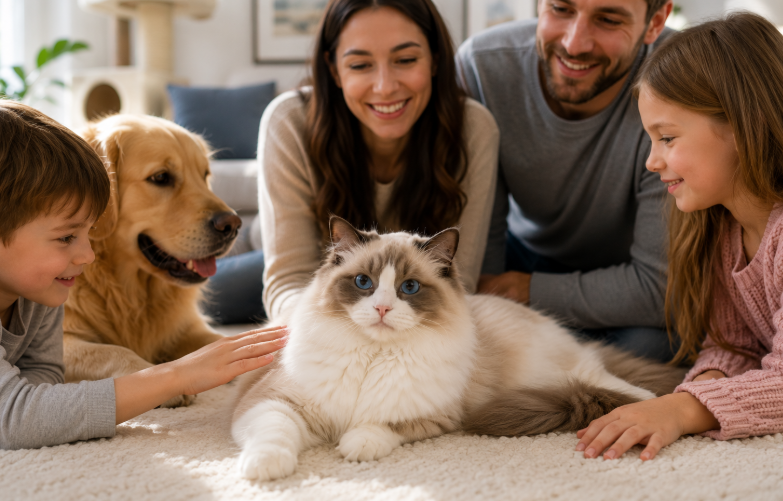
Children often enjoy this breed because of its calm and tolerant nature. However, respectful handling remains extremely important. Even friendly cats need gentle treatment and personal space. Teaching children how to interact calmly creates better experiences for both the cat and the family.
When discussing “Are Ragdoll Cats Friendly,” many owners mention how patient these cats seem around daily household activity. They usually tolerate moderate noise and movement better than highly anxious breeds. Still, quiet retreat spaces help them feel safe when they need rest.
Ragdolls also thrive on routine. Regular feeding, playtime, and affection help them feel secure indoors. Sudden changes or long periods without attention may create anxiety or sadness because these cats naturally enjoy social connection.
Their affectionate behavior often strengthens as trust develops over time. Some cats become more outgoing gradually after adjusting to their new home. Therefore, patience and consistency remain important during the early bonding process.
Interactions With Strangers and Visitors
One interesting trait about Ragdolls is their reaction to unfamiliar people. While some cats immediately hide from guests, Ragdolls often stay nearby out of curiosity. Many calmly observe visitors before approaching slowly for attention or interaction.
Of course, personality differences still exist. Some Ragdolls remain cautious at first, especially if they lacked socialization as kittens. However, most become comfortable more quickly than many other breeds once they realize the environment feels safe.
The question “Are Ragdoll Cats Friendly” becomes especially relevant for homes with regular visitors. In these situations, Ragdolls often perform well because they generally tolerate new people calmly. They may not greet every guest immediately, but aggressive or fearful reactions are less common.
Proper socialization during kittenhood helps improve confidence significantly. Positive exposure to different people, sounds, and environments teaches cats how to remain calm during unfamiliar situations. Gentle experiences create stronger social behavior as they mature.
Owners should still avoid forcing interaction. Even the friendliest cat needs the freedom to approach strangers at its own pace. Respecting boundaries helps maintain trust while reducing unnecessary stress.
Living With Other Pets
Many households already include dogs or additional cats. Because of this, future owners often ask whether Ragdolls adapt well to multi-pet homes. Fortunately, the breed usually handles companionship better than many people expect.
Ragdolls commonly coexist peacefully with calm dogs and friendly cats. Their relaxed personality often reduces territorial behavior and unnecessary aggression. However, successful introductions still require patience and supervision during the beginning stages.
When people ask “Are Ragdoll Cats Friendly,” they are often concerned about compatibility with existing pets. In most cases, gradual introductions lead to positive relationships. Separate spaces during the first few days help both animals adjust comfortably before direct interaction.
Ragdolls usually avoid confrontation whenever possible. Instead of fighting aggressively, they often retreat from stressful situations. Because of this gentle temperament, owners should monitor interactions with highly dominant or rough animals carefully.
Positive reinforcement also supports smoother introductions. Rewarding calm behavior encourages better experiences while reducing tension between pets. Over time, many Ragdolls become highly social companions within multi-pet households.
Why Emotional Connection Matters So Much
Ragdolls are not only physically affectionate. They also develop strong emotional bonds with their owners. Many owners notice that these cats seem emotionally aware of household moods and routines.
Because they crave companionship, Ragdolls may become lonely if ignored for long periods. They often prefer homes where someone remains available for interaction during part of the day. While independent moments still matter, complete isolation rarely suits this breed well.
The question “Are Ragdoll Cats Friendly” also connects to emotional intelligence. These cats often seek comfort through closeness and gentle attention. Many enjoy sitting beside people while they work, relax, or watch television.
Unlike some breeds that constantly demand activity, Ragdolls usually provide calm companionship instead. This peaceful nature appeals to owners who want an affectionate but less hyperactive pet.
However, emotional needs should never be ignored. Boredom or loneliness sometimes leads to sadness, overeating, or reduced activity. Therefore, regular engagement and interaction remain essential for maintaining emotional health indoors.
Indoor Living and Social Behavior
Ragdolls are commonly kept indoors because of their trusting personality. Since they tend to approach people easily, outdoor environments may expose them to unnecessary risks. Indoor living helps protect them while supporting safer long-term care.
Indoor cats still require stimulation, though. Play sessions, climbing spaces, and interactive toys prevent boredom while encouraging healthy activity. Social interaction also remains an important part of daily life.
Many owners continue asking “Are Ragdoll Cats Friendly” because they want a cat that truly participates in household life. Ragdolls often succeed in this role because they enjoy staying near people rather than isolating themselves constantly.
Their calm indoor behavior also makes them suitable for apartments or quieter homes. They generally adapt well to smaller spaces as long as they receive attention and enrichment daily.
Window perches, scratching posts, and puzzle toys help keep them mentally active. Additionally, regular routines provide emotional stability and comfort. Since Ragdolls enjoy predictable environments, consistency usually improves overall behavior.
Understanding Individual Personality Differences
Although the breed is widely considered friendly, no two cats behave exactly alike. Genetics, environment, socialization, and past experiences all influence personality development over time.
Some Ragdolls become extremely outgoing immediately, while others remain slightly reserved around strangers. Neither personality is unusual. Even calm breeds still display individual preferences and comfort levels.
When evaluating “Are Ragdoll Cats Friendly,” it helps to remember that friendliness does not always mean constant interaction. Some cats express affection quietly by staying nearby instead of actively seeking attention every moment.
Health also affects social behavior. Pain, stress, or illness may temporarily change personality or reduce tolerance. Therefore, sudden behavior changes should always receive attention from a veterinarian if they continue.
Owners who respect personal boundaries often build the strongest relationships with their cats. Gentle interaction, positive routines, and emotional security encourage trust naturally over time.
How Owners Can Encourage Friendly Behavior
Creating a positive home environment strongly supports social behavior in Ragdolls. Calm interaction, predictable routines, and daily affection help cats feel safe and confident indoors.
Positive reinforcement works especially well. Praise, treats, and gentle attention encourage healthy behavior more effectively than punishment. Harsh corrections often create fear rather than understanding.
Socialization should begin early whenever possible. Introducing kittens to different people, sounds, and experiences gradually helps build confidence and adaptability. However, adult cats can still improve social comfort through patient exposure and positive experiences.
The question “Are Ragdoll Cats Friendly” often depends partly on how owners respond to the cat’s emotional needs. Cats that feel secure and respected usually display more relaxed and affectionate behavior overall.
Playtime also strengthens trust. Interactive games create bonding opportunities while supporting mental and physical health. Since Ragdolls enjoy companionship, these activities often become important parts of their daily routine.
Most importantly, owners should allow the cat to approach interaction naturally. Trust develops more easily when cats feel safe and respected within their environment.
Conclusion
Ragdolls have earned their reputation as one of the friendliest cat breeds for good reason. Their calm temperament, affectionate behavior, and love of companionship make them wonderful indoor pets for many households. Whether living with families, children, visitors, or other pets, these cats usually adapt with patience and gentleness.
The question “Are Ragdoll Cats Friendly” can usually be answered with confidence. Most Ragdolls enjoy human interaction and form deep emotional bonds with the people around them. However, like all animals, they still need understanding, respect, and proper care to thrive emotionally and physically.
Creating a peaceful home environment, offering regular social interaction, and respecting personal boundaries all help strengthen their naturally loving personality. With the right attention and support, Ragdolls often become loyal companions who bring comfort, affection, and calm energy into everyday life.
FAQ
1. Do Ragdolls enjoy being around strangers?
Many do. They are often calmer around visitors than other breeds, especially when socialized early.
2. Are these cats good with children?
Yes, they usually interact gently with respectful children and enjoy calm family environments.
3. Can they live comfortably with dogs?
Most adapt well to friendly dogs when introductions happen slowly and carefully.
4. Why do these cats follow owners around the house?
Ragdolls naturally enjoy companionship and often stay close to people they trust.
5. Do they become lonely easily indoors?
Yes, many Ragdolls prefer regular interaction and may struggle with long periods of isolation.