Many cat owners feel frustrated when litter box problems suddenly appear at home. Fortunately, most issues can improve quickly once the cause becomes clear. If you want to Fix Ragdoll Cat Litter box problems effectively, understanding your cat’s behavior is the first step. Ragdolls are usually clean, calm, and easygoing cats. Because of this, sudden litter accidents often signal stress, discomfort, or changes in the environment rather than stubborn behavior.
Unlike some independent breeds, Ragdolls are sensitive to routines and surroundings. Small disruptions may affect their comfort level more than owners realize. A dirty litter box, loud household changes, or even the wrong litter type can create problems surprisingly fast. Thankfully, most situations improve once owners identify and remove the source of stress.
Many owners searching for ways to Fix Ragdoll Cat Litter problems feel worried that their cat is becoming disobedient. In reality, cats rarely avoid the litter box without a reason. Understanding those reasons helps owners respond calmly instead of making the situation worse with punishment or frustration.
The good news is that Ragdolls often respond well to simple adjustments. With patience, consistency, and proper care, many litter box habits return to normal quickly.
Why Ragdolls Suddenly Avoid the Litter Box
Ragdolls are naturally tidy cats, so litter box issues usually happen for a reason. In many cases, the problem begins with discomfort or stress rather than bad behavior. Since these cats prefer stable routines, even small changes may create confusion or anxiety.
One common issue involves cleanliness. Cats dislike dirty litter boxes, and Ragdolls are especially sensitive to strong odors or waste buildup. If the box is not cleaned regularly, your cat may start searching for cleaner alternatives around the house.
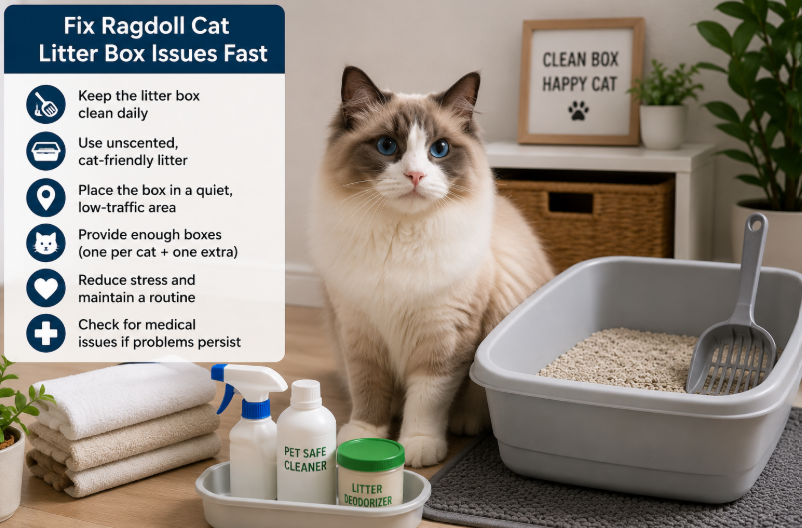
Another important factor involves litter type. Some cats dislike scented litter, rough textures, or sudden brand changes. Therefore, owners trying to Fix Ragdoll Cat Litter problems should consider whether recent litter changes triggered the behavior.
Location also matters more than many people expect. A litter box placed near loud appliances, busy hallways, or noisy children may feel unsafe. Cats prefer quiet and private spaces where they can relax without interruptions.
Stress can contribute heavily as well. New pets, visitors, furniture changes, or moving homes sometimes create anxiety that affects bathroom habits. Since Ragdolls bond closely with their environment, emotional stress often appears through litter box behavior first.
Medical problems should never be ignored either. Urinary infections, digestive discomfort, or pain may cause sudden accidents. If litter issues appear unexpectedly, veterinary attention helps rule out health concerns quickly.
Choosing the Right Litter Box Setup
Many owners focus only on cleaning while overlooking the litter box setup itself. However, comfort and accessibility strongly influence bathroom behavior. To successfully Fix Ragdoll Cat Litter issues, the setup must feel safe and inviting for the cat.
Size matters greatly for Ragdolls because they are larger cats. Small boxes may feel cramped or uncomfortable during use. A spacious litter box allows easier movement while improving comfort significantly.
Covered boxes work well for some cats but create stress for others. Since enclosed boxes trap odors and reduce visibility, some Ragdolls prefer open styles instead. Testing different options helps determine your cat’s preference.
The number of boxes also plays an important role. Most experts recommend one litter box per cat plus one extra. This setup prevents territorial stress while giving cats cleaner alternatives throughout the home.
For owners trying to Fix Ragdoll Cat Litter habits quickly, placement should remain calm and predictable. Quiet corners usually work best because cats feel safer away from loud activity. In multi-story homes, placing boxes on different floors improves accessibility and convenience.
Avoid moving boxes constantly unless necessary. Sudden changes may confuse cats and disrupt established routines. Stability helps Ragdolls feel secure and confident indoors.
How Cleanliness Affects Litter Habits
Cleanliness strongly affects litter box behavior in almost every cat breed. Since Ragdolls naturally enjoy tidy environments, poor maintenance often causes problems quickly.
Daily scooping removes odors and keeps the space fresh. If waste remains too long, many cats start avoiding the box entirely. Therefore, owners wanting to Fix Ragdoll Cat Litter issues should prioritize cleaning immediately.
Complete litter replacement also matters. Even when scooping happens regularly, old litter eventually traps odors and bacteria. Washing the box thoroughly before adding fresh litter improves hygiene significantly.
Strong cleaning chemicals should be avoided, though. Harsh scents sometimes discourage cats from using the box again. Mild soap and warm water usually work best for routine cleaning.
Tracking litter outside the box can create additional frustration. Large mats near the entrance help reduce scattered litter throughout the home. In addition, choosing low-dust litter may improve cleanliness and comfort for sensitive cats.
Some Ragdolls also become stressed if another pet uses the same box frequently. Separate litter areas reduce competition while supporting better hygiene overall.
Stress and Emotional Triggers Behind Accidents
Emotional stress often influences bathroom behavior more than many owners realize. Since Ragdolls are affectionate and emotionally sensitive, environmental changes may quickly affect their confidence indoors.
Moving homes, adding pets, or changing routines can trigger temporary accidents. Even rearranging furniture may create anxiety in some cats. Therefore, owners trying to Fix Ragdoll Cat Litter problems should evaluate recent household changes carefully.
Loneliness may contribute as well. Ragdolls enjoy companionship and often dislike long periods alone. Boredom or emotional stress sometimes appears through unusual bathroom behavior.
Loud environments also create discomfort. Vacuum cleaners, construction noise, or constant shouting may make litter areas feel unsafe. Quiet and stable surroundings help cats relax more comfortably.
Punishment should never be used during litter training problems. Yelling or scolding often increases anxiety while making the issue worse. Instead, calm redirection and positive reinforcement support better long-term results.
Maintaining consistent routines helps reduce stress significantly. Feeding times, play sessions, and litter cleaning schedules should stay predictable whenever possible. Cats usually feel safer when daily life follows familiar patterns.
Helping Kittens Develop Better Habits
Young kittens sometimes experience litter training challenges during adjustment periods. Fortunately, Ragdolls usually learn quickly when owners remain patient and consistent.
Kittens should always have easy access to the litter box. Placing boxes too far away increases the chance of accidents, especially during the first few weeks at home.
To Fix Ragdoll Cat Litter issues in kittens, owners should guide them gently after meals, naps, and play sessions. These moments often trigger bathroom needs naturally.
Positive reinforcement works especially well during training. Praise and gentle encouragement help kittens feel confident using the correct area. Harsh corrections only create fear and confusion.
Small accidents should remain calm learning opportunities. Cleaning affected areas thoroughly removes odors that might encourage repeat behavior later. Enzyme cleaners often work best because they eliminate lingering scents effectively.
Consistency matters more than perfection during early training stages. Most kittens gradually develop reliable habits when routines remain stable and supportive.
Understanding Common Medical Causes
Health issues sometimes appear through litter box behavior before other symptoms become obvious. Because of this, sudden changes should never be ignored completely.
Urinary tract infections commonly cause painful urination, which may lead cats to avoid the litter box. Constipation or digestive discomfort can create similar problems. In these situations, the cat may associate the box with pain rather than comfort.
Owners trying to Fix Ragdoll Cat Litter concerns should watch carefully for warning signs. Frequent bathroom trips, crying, blood in urine, or excessive licking may indicate medical issues requiring immediate attention.
Obesity can contribute too. Since Ragdolls often live indoors, limited exercise may create weight gain that affects mobility and comfort. Larger cats sometimes struggle with small or high-sided litter boxes.
Senior cats may also develop arthritis or joint pain over time. Entering the box becomes more difficult when mobility decreases. Lower-entry litter boxes often improve comfort for aging cats significantly.
Routine veterinary visits help identify hidden health concerns early. Preventive care supports both physical wellness and long-term litter habits.
Simple Changes That Improve Results Quickly
Sometimes small adjustments create major improvements surprisingly fast. Owners searching to Fix Ragdoll Cat Litter problems often succeed once they focus on comfort and routine together.
Start by improving cleanliness immediately. Scoop daily and replace litter regularly to remove strong odors. Many cats return to proper habits once the environment feels fresh again.
Next, evaluate litter texture and scent. Unscented and soft litter usually works best because it feels more natural under sensitive paws. Gradual transitions help prevent confusion when changing products.
Providing multiple litter boxes often improves results quickly as well. Extra options reduce stress while giving cats cleaner spaces throughout the home.
Playtime and interaction matter too. Since Ragdolls are social cats, emotional support helps reduce anxiety-related accidents. Daily engagement improves mental well-being while strengthening confidence indoors.
Consistency should remain the long-term goal. Stable routines create security, and secure cats generally display healthier bathroom behavior.
Preventing Future Litter Box Problems
Once habits improve, prevention becomes the next priority. Maintaining healthy routines reduces the chance of future accidents significantly.
Regular cleaning remains essential even after problems disappear. Many owners relax too quickly once behavior improves, but consistent hygiene prevents setbacks later.
To continue helping Fix Ragdoll Cat Litter habits long-term, owners should monitor emotional changes closely. New pets, schedule disruptions, or environmental stress may affect sensitive cats again in the future.
Routine veterinary care also supports prevention. Detecting health concerns early often stops litter problems before they become serious.
Environmental enrichment helps too. Interactive toys, scratching posts, and climbing spaces reduce boredom while supporting emotional health indoors. Happy and stimulated cats usually maintain better habits naturally.
Most importantly, owners should remain patient and observant. Cats communicate discomfort through behavior changes, and early attention often prevents larger issues from developing.
Conclusion
Litter box problems may feel stressful at first, but most situations improve once the cause becomes clear. Ragdolls are naturally clean and affectionate cats, so accidents usually signal discomfort, stress, or environmental problems rather than stubbornness.
Owners who want to Fix Ragdoll Cat Litter issues successfully should focus on cleanliness, emotional comfort, and consistent routines. Quiet litter locations, proper box sizes, and daily maintenance often create fast improvements. In addition, recognizing stress or medical concerns early helps prevent more serious behavior problems later.
Patience remains one of the most important tools during the process. Gentle guidance and positive routines help Ragdolls regain confidence quickly. With proper attention and supportive care, most cats return to healthy litter habits and continue living comfortably indoors for many years.
FAQ
1. Why does my cat suddenly stop using the litter box?
Stress, dirty litter, medical issues, or environmental changes commonly trigger sudden bathroom behavior problems.
2. How often should I clean the litter box?
Daily scooping and regular full litter replacement help maintain healthy and consistent bathroom habits.
3. Can stress really affect litter behavior?
Yes, emotionally sensitive cats often respond to household changes through bathroom-related behavior shifts.
4. What type of litter works best for indoor cats?
Many cats prefer unscented, soft-textured litter because it feels comfortable and less overwhelming.
5. Should I punish accidents around the house?
No, punishment usually increases stress and confusion. Calm redirection and cleaning work much better long-term.